Launching a B2B product that nobody knows about is not easy.
You cannot simply tell people about your product and expect them to start buying. They may not understand the problem you solve, they may not realise the problem is costing them money, or they may not even know that a solution like yours exists.
So, before you try to sell the product, you need to help your market understand why the problem matters in the first place.
When people do not know your product, they usually do not care about its features. They have no context for why those features should matter to their business.
Start with the problems they already recognise. Talk about wasted time, lost revenue, inefficient processes, rising costs, missed opportunities, or decisions made without the right information.
Once people recognise the problem, your product becomes much easier to introduce. It starts to feel like a possible answer instead of another product trying to get their attention.
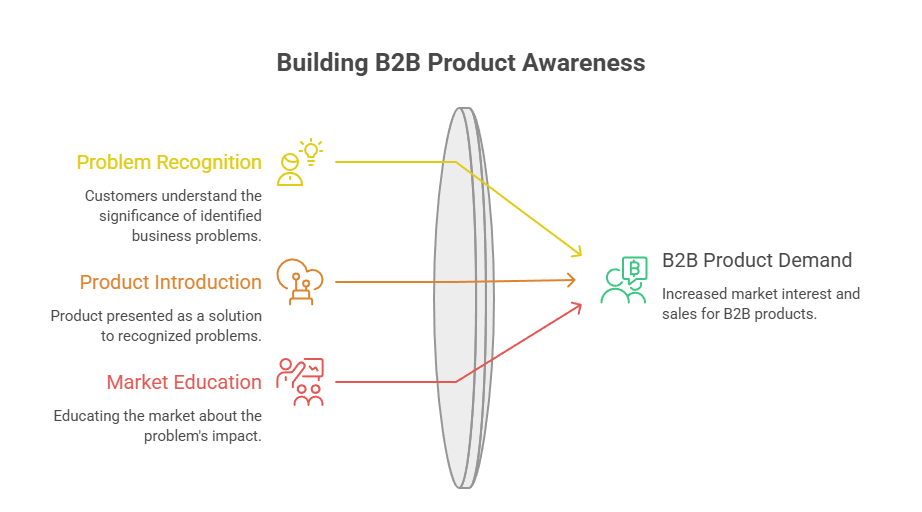
Most buyers are not actively searching for a solution they have never heard about. They may not even realise they have a problem worth solving.
This is where demand generation starts. Create content that helps people notice the problem and understand its impact on their business.
Explain what causes the problem, what it costs them, and what could happen if they continue with the same approach. When people start seeing their own situation in your content, you have their attention.
If your product belongs to a new or unfamiliar category, education becomes one of your strongest marketing tools.
People need someone who can explain the problem without turning every conversation into a sales pitch. That is where thought leadership can make a real difference.
Share LinkedIn posts, articles, videos, carousels, customer experiences, and practical insights. Give people something useful to take away from your content. Over time, they start seeing your company as a source of knowledge rather than another company trying to sell them something.
Even a great product will struggle if you put it in front of the wrong people.
Not every company has the same problems. Even within the same company, different decision makers may care about completely different outcomes.
Start by defining your ideal customer. Look at their industry, company size, responsibilities, challenges, buying triggers, and current processes. Then find the people who actually feel the problem you are solving.
A clear audience makes everything else easier. Your messaging becomes sharper, your content becomes more relevant, and your outreach feels much more personal.
If someone needs several minutes to understand what your product does, you probably need to simplify the message.
Do not start with complicated features or technical explanations. Start with the problem you solve, the impact of that problem, and the result your customer can expect.
Use the same language your customers use when they describe their challenges. Your message should make the right person think, “We are dealing with this right now.”
That moment of recognition is what opens the door to a real conversation.
LinkedIn can be especially useful when you are introducing something unfamiliar to the market.
But that does not mean every LinkedIn post should promote your product. In fact, constantly selling can make it harder to build trust.
Create content around the problems your audience cares about. Share lessons, opinions, industry observations, practical frameworks, customer stories, and useful data. Give people a reason to follow you even when they are not ready to buy.
Your LinkedIn profile should tell the same story. When someone discovers you through a post, they should quickly understand who you help, what problems you solve, and why they should listen to you.
Getting likes and views feels good, but demand generation needs to go further than engagement.
Look at the people who regularly interact with your content. Pay attention to comments, profile visits, shares, direct messages, and people who repeatedly engage with topics related to your solution.
Instead of immediately pitching them, start a conversation. Ask what they are currently doing, what challenges they are facing, or how they approach the problem today.
You are not trying to force a meeting. You are trying to understand whether there is a genuine business problem worth discussing.
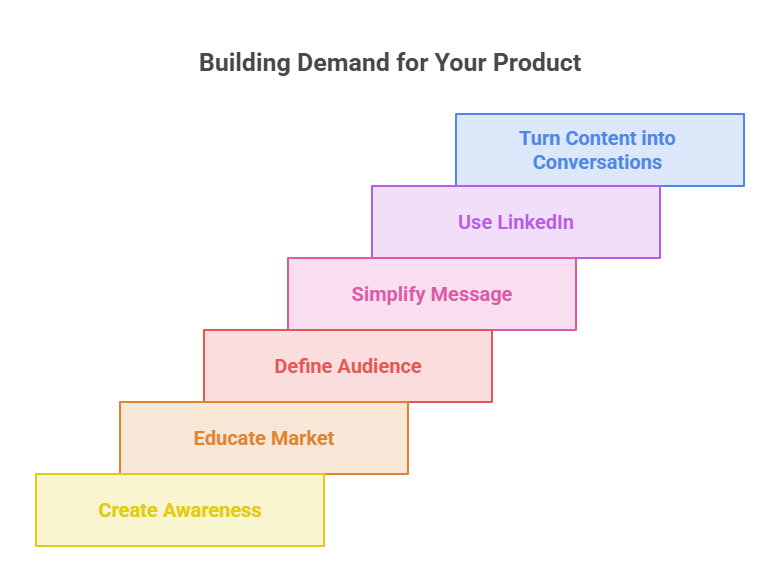
Outbound can work very well when nobody knows your product, but you need to approach it differently.
A message saying, “We have a great product and would love to show you a demo,” will rarely create much interest when the prospect has never heard of your category.
Start with something they understand. Talk about a business problem, industry change, trigger, or challenge that is relevant to their role.
Give them a reason to respond before asking for a meeting. Good outbound is not about sending more messages. It is about sending messages that actually make sense to the person receiving them.
When people are unfamiliar with your product, they naturally have doubts.
Will this actually work for us? Has another company tried it? What kind of results can we expect? Will implementation become another headache?
This is where proof matters.
Use customer stories, case studies, testimonials, demonstrations, data, and real examples to make your solution easier to trust. If you are still early in your journey, use pilot projects, detailed use cases, and product walkthroughs to show what your solution can actually do.
People may be interested in an idea, but proof helps them believe it can work.
One common mistake in B2B marketing is asking for a meeting before the buyer has enough context.
Someone who has just discovered your company may not be ready to spend thirty minutes on a sales call. Give them a reason to learn more first.
Create useful guides, checklists, reports, webinars, comparison content, calculators, and practical frameworks. Make these resources genuinely useful instead of turning them into long sales brochures.
When you educate people before asking them to buy, you make the buying conversation much easier.
A large number of leads can make a marketing campaign look successful. But lead volume does not always mean genuine demand.
Look at the quality of conversations you create. Track engagement, account activity, website behaviour, qualified meetings, pipeline creation, and eventually revenue.
You want to understand whether people are moving from unaware to curious, curious to interested, and interested to ready.
The goal is not to collect thousands of contacts. The goal is to create interest among the right people.
If nobody knows your product today, do not expect the market to understand it after one LinkedIn post or one email campaign.
People need repeated exposure before something unfamiliar starts feeling familiar.
Someone might see your post today, read your article a few weeks later, hear your name from a colleague, and finally reach out months later when the problem becomes urgent.
That is normal.
Keep educating your audience, improving your messaging, sharing proof, starting conversations, and learning from what works. Demand builds over time when you keep showing up with something useful.
If you sell an established product, buyers already understand the category. They know what they are looking for and can compare different options.
An unfamiliar product is different.
You first need to help buyers understand the problem. Then you need to show them that the problem deserves attention. Finally, you can introduce your product as one possible solution.
That is where thought leadership becomes powerful.
When your company consistently explains a problem clearly, shares useful insights, and helps people make better decisions, your audience starts remembering you.
Then, when that problem becomes urgent, your company is already somewhere in their mind.
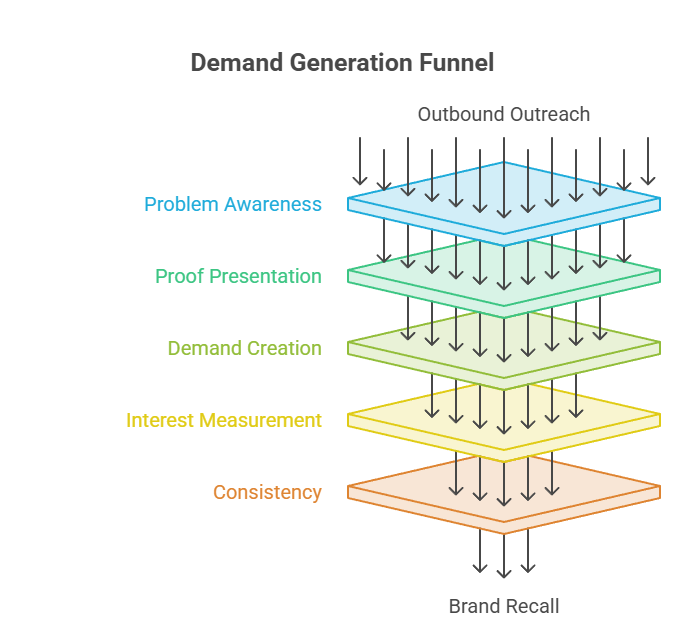
Generating demand for an unfamiliar B2B product takes more than publishing content or sending cold emails. You need the right audience, clear positioning, useful content, targeted outreach, strong proof, and a consistent follow-up process.
At Salesamore, we help B2B companies build structured demand generation strategies that connect the right prospects with the right message at the right stage of their buying journey.
Want to see what this could look like for your business?
Book a call with Salesamore, send us a direct message, or comment below with the biggest challenge you face when generating B2B demand.
Let’s turn an unfamiliar product into a solution your market understands, remembers, and wants.
As an entrepreneur, I have gained great exposure to B2B sales strategies, processes, and practices as CEO of Salesamore. I am known for a strict approach and do not deviate from my target, which is to get my sales figures up by means of lead generation, demand generation, and Account-Based Marketing (ABM). Through a deep understanding of Go-To-Market (GTM) strategies, I have been branded by the corporate sector as the one who turns opportunities into reality and the one who brings magic to the whole process. I am thrilled to help startups polish their sales methods and smash the competition with unprecedented results. We hope you enjoyed reading this blog! Don’t forget to check out these valuable resources to stay connected and explore more about what we have to offer:
To get valuable free insights deliver straight to your inbox


In accordance with the current EU data protection laws, please take a minute to reviwe the term & conditions for using our services. Our terms describe how we use data and the options available to you.

