A B2B sale usually does not happen after one conversation.
There are a lot of exchanges between the time a possible customer finds out about your company and the time they sign the contract. Without a plan, leads can be ignored, salespeople can focus on the wrong people, and managers find it hard to see what is actually happening with income.
This is where a B2B sales pipeline becomes important.
A sales pipeline gives your team a way to see where every possible customer is, what needs to happen next and how likely each chance is to become a customer.
Even though every company might set up its pipeline in a different way, most B2B sales processes can be split into seven main stages.
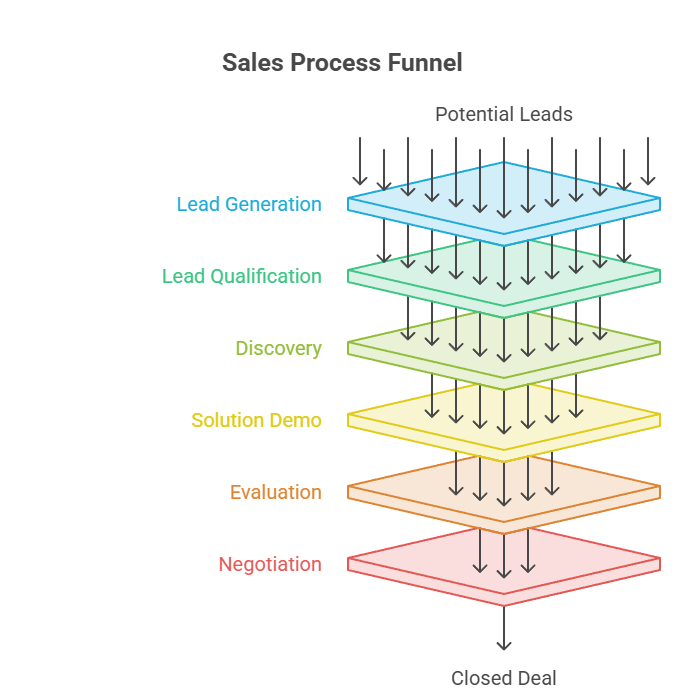
Everything starts with finding people who might buy from you.
At this point, your goal is not to make a sale. It is to have a flow of people who could eventually become customers.
Leads can come from places such as:
The key is to focus on the right leads, not just on having a lot of leads.
A list of 10,000 companies is not very helpful if only a few of them match the kind of customer you want.
Not every lead needs the amount of effort.
Once a lead is in your pipeline, the next step is to check if there is a business chance.
Salespeople usually look at things like:
Qualification helps salespeople tell the difference between leads and real chances.
This is also where good sales teams protect their time. A lead that looks good on paper may not be worth chasing if there is no problem, need or chance to sell.
Once a lead is checked, the conversation gets more detailed.
The discovery stage is about learning about the customer’s situation before you show a solution.
Instead of talking about your product or service right away, your sales team should ask questions.
What problem are they trying to solve?
What is causing that problem?
How is it affecting the business?
What happens if nothing is done?
Who else is involved in the choice?
The best discovery calls make things clearer for both sides.
You are checking if the chance is a fit while the person you are talking to is starting to see the cost of not fixing the problem.
Now it is time to link the customer’s problem with your solution.
This could involve demonstrating your product, showing a presentation, talking about a proposal, having a workshop or walking through a solution depending on your business.
The biggest mistake here is giving the presentation to everyone.
A strong B2B presentation should match what you learned during discovery.
If the person’s biggest worry is reducing work that is done manually, show how your solution helps with that.
If their main goal is to have sales information, focus on the features and results that matter.
Don’t just show what your product does. Show why it matters to the customer.
If the person sees value in your solution, the talk usually moves to a proposal.
This is where money, what you will do, when you will do it, what you will deliver, how you will set it up and the terms of the deal are discussed.
Remember, asking for a proposal does not mean you have a strong chance.
The person might still be looking at options, talking about the purchase inside their company or trying to see if the money is worth it.
Your job is to help them make the choice.
Make the proposal easy to understand. Clearly explain the problem you are solving, the results you expect, the cost and what comes next.
At this point, the chance is getting close to a decision.
This is often where deals slow down.
The person might have questions about the price, the way it is set up, the contract, the time it takes or approval inside their company.
Sometimes the person you have been talking to likes the purchase, but another person in charge has not been convinced.
This is why sales teams need to understand the process of making a decision, not just the person they have been talking to.
Ask questions like:
“Who else will be involved in the decision?”
“What issues might come up during approval?”
“What needs to happen before you can go forward?”
The more you know about the buying process, the fewer surprises you will face at the end.
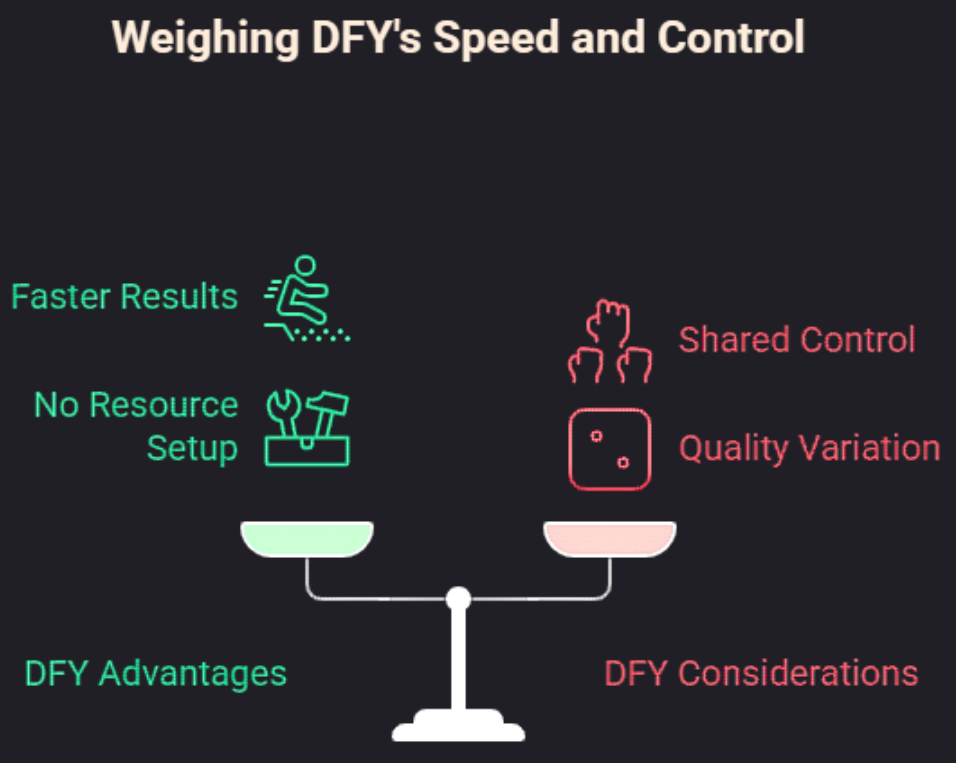
Finally, the chance reaches a decision.
If the person signs the agreement and becomes a customer, the chance is closed as a win.
If they choose another option, decide not to move or stop responding after a certain time, it might be closed as a loss.
The sales process should not stop with the status update.
For wins, the sales team should make sure the handoff to onboarding, customer success or delivery is smooth.
For losses, the team should find out why the chance was lost.
Was the price high?
Was there no reason to act quickly?
Did another company win?
Was the solution not the fit?
Was the decision put off?
These answers can help improve sales.
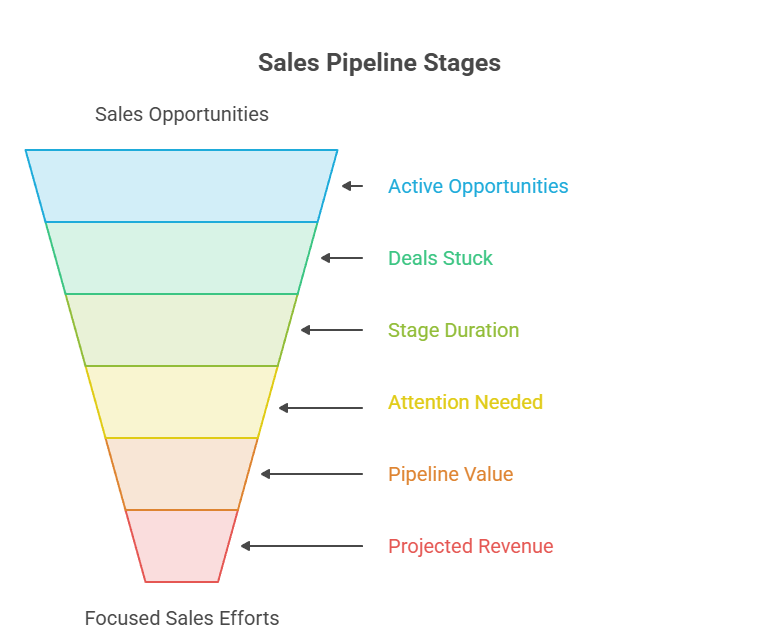
A sales pipeline is more than a list of people in a CRM.
It gives your business a way to see the money journey.
When every chance has a stage, sales leaders can ask important questions:
Even more important, it helps sales teams focus on the right things.
A pipeline should tell a salesperson not only where the chance is, but also what needs to happen next.
One of the problems with pipelines is having a lot of chances that do not move.
A CRM can show hundreds of deals. If most of them have been in the same stage for months, the pipeline might not be as good as it seems.
A healthy pipeline has movement.
Leads are being checked. Checked people are moving into discovery. Chances are moving through evaluation and negotiation. Closed deals are replaced by chances.
That creates a sales system instead of a set of unrelated people.
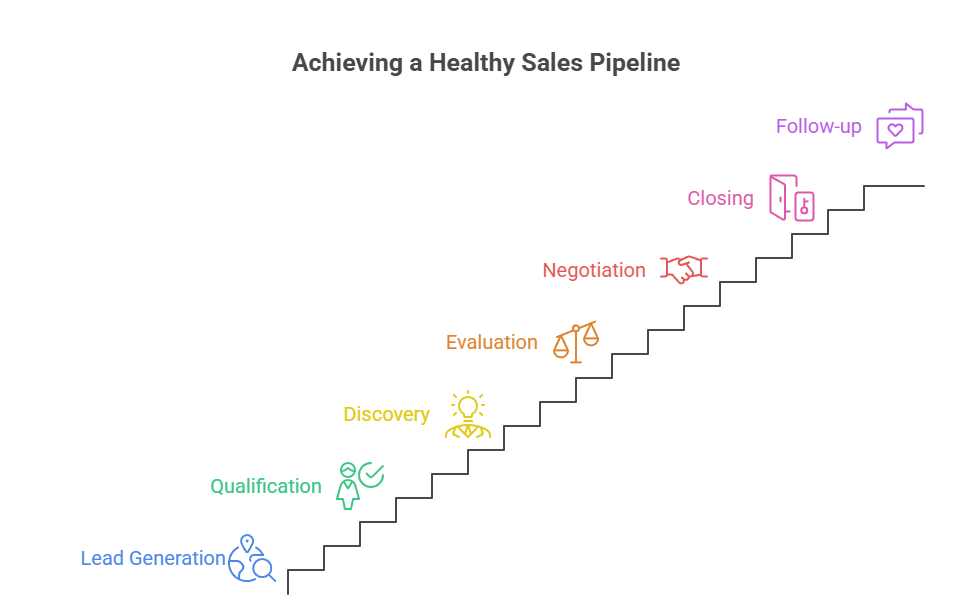
The seven stages above are a guide, but your pipeline should match the way your customers actually buy.
Some companies might need stages for checking technical details, getting approval from a department, checking security or getting more people to agree.
Other companies might have a sales time with fewer stages.
The goal is not to make a complicated pipeline.
The goal is to make a pipeline that gives your team clarity, responsibility and a clear view of the money you make.
If your team always asks, “What is happening with this chance?” or “Why are these chances not moving?” your pipeline may need structure.
A strong sales pipeline can help you see where chances are getting stuck, improve the way you follow up, and have a view of your money forecast.
At Salesamore, we help companies make their B2B sales process clearer and more organised, from finding people to managing chances and making sales.
Book a call with Salesamore to talk about your sales pipeline and see where you can get results.
The best 30 minutes you’ll ever spend to make the biggest impact on your bottom line!
To get valuable free insights deliver straight to your inbox




As an entrepreneur, I have gained great exposure to B2B sales strategies, processes, and practices as CEO of Salesamore. I am known for a strict approach and do not deviate from my target, which is to get my sales figures up by means of lead generation, demand generation, and Account-Based Marketing (ABM).
Through the deep understanding of Go-To-Market (GTM) strategies, I have been branded by the corporate sector as the one who turns opportunities into reality and the one who brings magic to the whole process.
I am thrilled to help startups polish their sales methods and smash the competition with unprecedented results. We hope you enjoyed reading this blog!
Don’t forget to check out these valuable resources to stay connected and explore more about what we have to offer:
Subscribe to My YouTube Channel: Stay updated with the latest videos, tutorials, and insights by subscribing to our YouTube channel.
Visit Our Website: Learn more about our services, solutions, and how we can help you achieve your goals by visiting our official website.
Watch Our Featured Video (VSL): Don’t miss our featured video! Click here to watch and gain valuable insights.
In accordance with the current EU data protection laws, please take a minute to reviwe the term & conditions for using our services. Our terms describe how we use data and the options available to you.

