

Prospects Don’t Hate Outreach, They Hate Irrelevance What modern buyers actually reject (and what they actually welcome) Let’s clear something up. Outreach isn’t failing because people hate being contacted. Outreach fails because most messages feel like they were sent to a spreadsheet, not a human being. Modern buyers aren’t avoiding conversations. They’re avoiding messages that waste their time. There’s a big difference. The Moment We’ve All Experienced A sales director opens their inbox between back-to-back meetings. “Helping companies grow faster.” Delete. “Just following up.” Delete. “We provide AI-powered solutions.” Delete. Then one message catches their attention: “Saw your team is expanding into enterprise accounts. Many teams see deal cycles stretch at this stage. If pipeline velocity is slowing, I can share what we’ve seen work.” They pause. Not because it’s clever. Because it feels relevant. Outreach Isn’t the Problem. Irrelevance Is. People are busy. Their days are packed with decisions, deadlines, and responsibilities. When a message doesn’t clearly connect to what they’re dealing with, it becomes background noise. Irrelevant outreach feels frustrating because: it shows no effort was made to understand them it interrupts without offering value it forces them to figure out why it matters Most won’t bother. Why Generic Messaging Backfires Buyers can spot a template in seconds. And when they do, three things happen: Trust drops instantly If the first message feels lazy, expectations for everything that follows drop too. Your message becomes noise Busy professionals filter aggressively. Anything unclear gets ignored. It feels self-centered When messaging talks about your company instead of their challenges, they disengage. Outreach should create clarity, not extra work. What Modern Buyers Actually Reject Surface-level personalization Adding a name or company isn’t personalization. It’s formatting. Feature-heavy pitches People don’t buy features. They solve problems. Follow-ups with no added value Persistence without insight feels like pressure. One-message-fits-all outreach A founder, a sales leader, and a marketing head don’t think about success the same way. What Buyers Welcome Instead Relevance doesn’t require long emails or fancy language. It requires awareness. Buyers respond when outreach shows: Awareness of their situation Growth, hiring, expansion, or change signals priorities. A problem they recognize immediately If they nod while reading, you’ve earned attention. Clarity and brevity Busy people appreciate direct communication. Useful perspective Insight builds credibility faster than promotion. Respect for their time Short and meaningful beats long and forgettable. Buyers Haven’t Stopped Responding. They’ve Started Filtering. Today’s buyers are informed before you reach them. They’ve researched options and compared solutions. They don’t need more information. They value insight. They respond to people who help them think clearly about a problem they’re already facing. That’s the difference between noise and value. Noise vs. Relevance: A Simple Comparison Typical outreach “Hi, we provide a platform that improves productivity and efficiency. Can we schedule a call?” Relevant outreach “Many growing teams see lead response times drop once inbound volume increases. If speed-to-lead is slipping, I can share a simple way to fix it.” One pushes a product. The other addresses a real situation. People feel the difference immediately. How to Make Outreach Feel Worth Reading Look for moments of change Change creates openness: hiring growth funding announcements new markets product launches leadership changes Focus on one problem Trying to say everything weakens the message. Focus makes it clear. Speak their language A founder thinks about runway. A sales leader thinks about pipeline. A marketing leader thinks about CAC. Match what matters to them. Share insight before selling Understanding builds trust faster than pitching. Make replying easy Keep it simple. Remove pressure. Outreach Isn’t Dead. Thoughtless Outreach Is. People still reply. They still engage. They still welcome useful conversations. But attention isn’t automatic anymore. It’s earned through relevance. Before Sending, Ask Yourself: Would this feel useful if I received it? Does it reflect a real challenge they might face? Is this written for them or for me? If it feels generic, it will be ignored. If it feels thoughtful, it will be read. If it feels relevant, it will get a response. Final Thought Prospects don’t hate outreach. They dislike being treated like entries in a list. They dislike being pitched without being understood. They dislike noise disguised as opportunity. But when a message feels timely, thoughtful, and grounded in reality… it stops being an interruption. It becomes useful. And useful messages get answered. Join 10k+ Entrepreneurs To get valuable free insights deliver straight to your inbox Related Posts B2B Sales Cracked! In-Depth Analysis & Tips How To Convert Leads into Customers 5 Strategies for Excelling in B2B Customer Relationship Management 10 Tips for SMB Success in B2B: Advice from Experts About the Author As an entrepreneur, I have gained great exposure to B2B sales strategies, processes, and practices as CEO of Salesamore. I am known for a strict approach and do not deviate from my target, which is to get my sales figures up by means of lead generation, demand generation, and Account-Based Marketing (ABM). Through the deep understanding of Go-To-Market (GTM) strategies, I have been branded by the corporate sector as the one who turns opportunities into reality and the one who brings magic to the whole process. I am thrilled to help startups polish their sales methods and smash the competition with unprecedented results. We hope you enjoyed reading this blog! Don’t forget to check out these valuable resources to stay connected and explore more about what we have to offer: Subscribe to My YouTube Channel: Stay updated with the latest videos, tutorials, and insights by subscribing to our YouTube channel. Visit Our Website: Learn more about our services, solutions, and how we can help you achieve your goals by visiting our official website. Watch Our Featured Video (VSL): Don’t miss our featured video! Click here to watch and gain valuable insights.

The First 7 Seconds Decide Your Deal, Not Your Demo
The First 7 Seconds Decide Your Deal, Not Your Demo What buyers judge before they ever agree to a call Most sales teams think deals are won in the demo. The perfect walkthrough.The polished slides.The feature comparison.The closing question. But here’s the uncomfortable truth. Most deals are decided long before the demo ever happens. In the first few seconds of exposure to your message, your profile, your website, or your outreach, buyers make a silent decision: “Is this worth my time?” If the answer is no, there is no demo to save you. The invisible filter buyers use Today’s B2B buyers are overloaded. Their inbox is full.Their calendar is packed.Their attention is limited. So they rely on fast judgments. Within seconds, they scan: Your headlineYour opening lineYour positioningYour clarityYour credibility They are not deeply reading. They are deciding. If what they see feels generic, unclear, or self-focused, you are filtered out. Not rejected.Filtered. And that filter is brutal. What buyers actually judge in the first 7 seconds It is not your pricing.It is not your features.It is not your case studies. They judge three things first. ClarityCan I instantly understand what this is about? RelevanceDoes this connect to a problem I care about? CredibilityDoes this feel like someone who understands my world? If you miss even one of these, the conversation never begins. Why most sales messaging fails early Most B2B messaging tries to impress. “We are innovative.”“We are leading.”“We provide end to end solutions.” None of this helps a buyer decide quickly. Buyers do not care about impressive words. They care about clear signals. When messaging focuses on you instead of their situation, attention drops. And once attention drops, recovery is rare. The cost of weak first impressions Weak first impressions create invisible damage. Lower reply rates.Fewer booked calls.Longer sales cycles.Higher pressure in demos. Sales teams then compensate with more effort. More follow ups.More sequences.More persuasion. But effort cannot fix a weak first signal. If the first seven seconds fail, everything after becomes harder. How to win the first 7 seconds Strong sales systems are designed to pass the first filter. They focus on: Clear positioning that states who you help and howOpening lines that reference real problemsMessaging that reflects buyer languageSocial proof placed early, not buriedSimple explanations, not complex descriptions When buyers immediately see themselves in your message, curiosity replaces skepticism. That is when they agree to calls. Not because of a great demo. Because of a clear beginning. The shift from demo selling to perception design Modern B2B growth is not just about what happens in meetings. It is about what happens before meetings. Your contentYour websiteYour outreachYour personal brandYour positioning All of these decide whether you get invited into a conversation. The demo closes. But the first seven seconds open. If you lose the opening, there is nothing to close. Conclusion If your team keeps hearing “we’ll get back to you” or struggles to book meetings, the issue is rarely the demo quality. It is the first impression. Deals are not won by explaining better. They are won by connecting faster. In 2026, attention is the gatekeeper. Win the first seven seconds, and everything after becomes easier. Lose them, and you are selling uphill. Join 10k+ Entrepreneurs To get valuable free insights deliver straight to your inbox Related Posts B2B Sales Cracked! In-Depth Analysis & Tips How To Convert Leads into Customers 5 Strategies for Excelling in B2B Customer Relationship Management 10 Tips for SMB Success in B2B: Advice from Experts Ready to strengthen your first impression? At Salesamore, we help B2B companies design messaging, positioning, and demand systems that win attention before the first call ever happens. If your pipeline feels slow or inconsistent, let’s fix the beginning. Book a free consultation with Salesamorehttps://salesamore.com/consultation Let’s build a sales system that earns the first seven seconds. About the Author As an entrepreneur, I have gained great exposure to B2B sales strategies, processes, and practices as CEO of Salesamore. I am known for a strict approach and do not deviate from my target, which is to get my sales figures up by means of lead generation, demand generation, and Account-Based Marketing (ABM). Through the deep understanding of Go-To-Market (GTM) strategies, I have been branded by the corporate sector as the one who turns opportunities into reality and the one who brings magic to the whole process. I am thrilled to help startups polish their sales methods and smash the competition with unprecedented results. We hope you enjoyed reading this blog! Don’t forget to check out these valuable resources to stay connected and explore more about what we have to offer: Subscribe to My YouTube Channel: Stay updated with the latest videos, tutorials, and insights by subscribing to our YouTube channel. Visit Our Website: Learn more about our services, solutions, and how we can help you achieve your goals by visiting our official website. Watch Our Featured Video (VSL): Don’t miss our featured video! Click here to watch and gain valuable insights.
The Real Reason Buyers Say “Sounds Interesting” and Then Disappear
The Real Reason Buyers Say “Sounds Interesting” and Then Disappear What polite interest actually means, and how to prevent silent drop-offs Almost every founder or sales leader has heard it. “That sounds interesting.”“Let me look into it.”“Circle back next quarter.” And in that moment, it feels like progress. But then the follow-ups go unanswered.The calendar stays empty.The deal quietly dies. This isn’t bad luck.And it’s not because buyers suddenly lost interest. It’s because “sounds interesting” rarely means what we think it means. What buyers are really saying when they say “sounds interesting” In today’s B2B buying world the phrase “sounds interesting” is often used as a polite exit from the conversation. It very rarely means one of three things: 1) They understand what you do and the benefit it could provide; however they may not feel that it is important enough for them to act immediately. 2) They see potential benefit; however they don’t have enough urgency or desire to take action at this time. 3) They don’t have sufficient confidence to move the discussion on their behalf inside their company. In reality these types of responses are not meant to be rejections, rather they are simply saying that the buyer is postponing on making a decision until they are ready to move forward. This is the moment in time where most pipelines leak silently The hidden problem isn’t interest. It’s clarity. The majority of sales discussions revolve around the description of the solution/feature/benefit/capacity. When the buyer has no clear understanding of their problem, they typically become absent. If they are unable to articulate their problem in a manner that they can explain to their boss, coworkers or even themself, there is no continued progress. Without a clear understanding of the problem there is no way for them to give you a commitment to any response. Their response, “that is interesting” is a way to politely distance themselves from a commitment. Its a way for them to purchase time, and it is going to cost you momentum. Why polite interest is dangerous for your pipeline The most dangerous deals aren’t the ones that say no. They’re the ones that say maybe. Because maybes sit in your CRM.They inflate your pipeline.They give false confidence. Meanwhile, your forecast looks healthy, but revenue stays unpredictable. Polite interest creates the illusion of traction without commitment. And most teams mistake that illusion for progress. Where sales conversations usually go wrong Silent drop-offs usually happen because the conversation skipped one critical step. You talked about what you offer before anchoring why change matters now. Buyers don’t move because something is better.They move because staying the same feels risky. If your conversation doesn’t clearly surface:• the cost of inaction• the hidden risk of delay• the consequence of doing nothing then “interesting” is the natural response. It means you educated, but you didn’t activate. How to prevent buyers from disappearing after interest The goal is not to push harder.It’s to guide better. Strong sales conversations help buyers think, not just listen. They focus on:• clarifying the real problem• naming the impact in the buyer’s language• helping buyers connect the issue to their priorities When buyers can clearly explain the problem themselves, urgency becomes internal, not imposed. That’s when interest turns into movement. The shift from polite interest to real momentum High-performing sales teams don’t chase follow-ups endlessly. They design conversations that make the next step obvious. They don’t ask, “Would you like to move forward?”They ask questions that help buyers realize why standing still is the bigger risk. That shift changes everything. From silence to response.From curiosity to commitment.From “sounds interesting” to “what’s the next step?” Conclusion Buyers don’t disappear because your offer is weak. They disappear because the problem wasn’t clear enough to act on. If your pipeline is full of polite interest but light on real decisions, the issue isn’t effort, timing, or follow-up discipline. It’s the conversation. When you help buyers clearly see the problem and the cost of delay, they don’t ghost you.They lean in. Ready to fix silent drop-offs in your pipeline? At Salesamore, we help B2B teams design sales systems and conversations that turn interest into action, not silence. If your deals sound promising but keep stalling, let’s find out why. Book a free consultation with Salesamorehttps://salesamore.com/consultation/ Let’s build clarity that converts, not conversations that fade. About the Author As an entrepreneur, I have gained great exposure to B2B sales strategies, processes, and practices as CEO of Salesamore. I am known for a strict approach and do not deviate from my target, which is to get my sales figures up by means of lead generation, demand generation, and Account-Based Marketing (ABM). Through the deep understanding of Go-To-Market (GTM) strategies, I have been branded by the corporate sector as the one who turns opportunities into reality and the one who brings magic to the whole process. I am thrilled to help startups polish their sales methods and smash the competition with unprecedented results. We hope you enjoyed reading this blog! Don’t forget to check out these valuable resources to stay connected and explore more about what we have to offer: Subscribe to My YouTube Channel: Stay updated with the latest videos, tutorials, and insights by subscribing to our YouTube channel. Visit Our Website: Learn more about our services, solutions, and how we can help you achieve your goals by visiting our official website. Watch Our Featured Video (VSL): Don’t miss our featured video! Click here to watch and gain valuable insights. Join 10k+ Entrepreneurs To get valuable free insights deliver straight to your inbox Related Posts B2B Sales Cracked! In-Depth Analysis & Tips How To Convert Leads into Customers 5 Strategies for Excelling in B2B Customer Relationship Management 10 Tips for SMB Success in B2B: Advice from Experts

From Prospecting to Partnering: How the Best Sellers Create Demand Instead of Chasing It
From Prospecting to Partnering: How the Best Sellers Create Demand Instead of Chasing It How modern sales teams flip the script—and why it works. A sales representative opens their CRM and starts calling the first client on Monday morning and sends out an email with follow-ups and a few messages on LinkedIn. By the close of business on Friday, they have worked all week but have very little movement in their pipeline. If this sounds like your week, you are not alone. The majority of B2B sales teams operate in a mode of always being on the lookout for new potential customers, making percentages of successful calls to new prospects, and pushing for closings. The top salespeople today are not chasing down sales; they are attracting customers and prospects. Why Traditional Prospecting Is Losing Power Prospecting used to work because buyers had limited information.Sales reps were the gatekeepers of knowledge. That world is gone. Today’s buyers: Research before replying Compare options silently Involve multiple stakeholders Ignore anything that feels transactional When sellers lead with pitches instead of insight, buyers pull away. The result?Low response rates.Longer sales cycles.More ghosting. The Shift: From Selling to Partnering Modern sales teams are making a quiet but powerful shift. They’re no longer asking: “How do I get this prospect on a call?” They’re asking: “How do I help this buyer think differently about their problem?” That’s the difference between prospecting and partnering. Partnering means: Understanding the buyer’s business deeply Offering insight before asking for time Helping buyers frame the problem clearly Positioning yourself as a guide, not a vendor How the Best Sellers Create Demand Here’s what top-performing sales teams do differently: 1. They Lead with Insight, Not Product Instead of pitching features, they share: Industry trends Common mistakes they see Missed opportunities New ways to think about old problems This creates curiosity—and curiosity creates demand. 2. They Personalize Based on Context, Not Templates Modern sellers don’t personalize by adding a name. They personalize by understanding: The buyer’s role Their market Their current challenges Relevance replaces volume. 3. They Build Trust Before Asking for Commitment Great sellers don’t rush the meeting. They earn it. They show up consistently with value through: Content Conversations Follow-ups that help, not push Trust becomes the accelerant. 4. They Align With Buying Committees Instead of selling to one “decision-maker,” they support the entire buying group. They give their champion: Clear messaging Internal sell material Answers to objections This turns internal conversations in their favor. 5. They Think Long-Term, Not Transactional Partnering sellers understand: Not every conversation leads to a deal today. But every conversation builds: Awareness Credibility Preference And that’s how pipelines stay healthy—even in slow markets. Why Demand Creation Beats Lead Chasing When you create demand: Buyers come to you informed Sales cycles shorten Discounting decreases Win rates improve You stop convincing. You start collaborating. And suddenly, sales feels less like pressure—and more like progress. Conclusion The future of B2B sales isn’t louder outreach or smarter scripts.It’s better conversations. The best sellers in 2025 and beyond aren’t chasing prospects.They’re partnering with buyers—helping them see problems clearly and choose solutions confidently. If your team is tired of chasing leads and wants to create real demand,it’s time to flip the script. Join 10k+ Entrepreneurs To get valuable free insights deliver straight to your inbox Related Posts B2B Sales Cracked! In-Depth Analysis & Tips How To Convert Leads into Customers 5 Strategies for Excelling in B2B Customer Relationship Management 10 Tips for SMB Success in B2B: Advice from Experts If you want to build a modern sales system that: Creates demand Builds trust Shortens sales cycles And turns prospects into long-term partners 👉 Book a free consultation with Salesamore: https://salesamore.com/consultation About the Author As an entrepreneur, I have gained great exposure to B2B sales strategies, processes, and practices as CEO of Salesamore. I am known for a strict approach and do not deviate from my target, which is to get my sales figures up by means of lead generation, demand generation, and Account-Based Marketing (ABM). Through the deep understanding of Go-To-Market (GTM) strategies, I have been branded by the corporate sector as the one who turns opportunities into reality and the one who brings magic to the whole process. I am thrilled to help startups polish their sales methods and smash the competition with unprecedented results. We hope you enjoyed reading this blog! Don’t forget to check out these valuable resources to stay connected and explore more about what we have to offer: Subscribe to My YouTube Channel: Stay updated with the latest videos, tutorials, and insights by subscribing to our YouTube channel. Visit Our Website: Learn more about our services, solutions, and how we can help you achieve your goals by visiting our official website. Watch Our Featured Video (VSL): Don’t miss our featured video! Click here to watch and gain valuable insights.
Marketing Teams Aren’t Busy They’re Distracted
Marketing Teams Aren’t Busy, They’re Distracted The real reason content doesn’t convert anymore. Let me tell you a unique story about every entrepreneur out there. One such entrepreneur said to me, “We’re doing everything possible in our marketing efforts. We post every day, have ads going, have created many blogs, send out email marketing campaigns, etc… yet we don’t get any leads.” I didn’t say anything at first.I just looked at their content. And instantly, the problem was obvious. They weren’t busy.They were busy doing the wrong things. This is the silent crisis inside most B2B companies today —Marketing teams look productive, but they’re completely distracted.And distraction kills conversions faster than bad strategy ever will. The Illusion of Busy Marketing Scroll through any marketing team’s Monday morning meeting notes and you’ll see: “We need more posts.” “Let’s try a new reel trend.” “Maybe we should do a webinar?” “Let’s push out another newsletter.” “We should revamp our carousel design.” It looks like work.It feels like progress. But here’s the truth: When your marketing is focused on output instead of outcomes,your pipeline will always stay empty. Busy ≠ effective.More content ≠ more leads. The Real Reason Content Isn’t Converting Anymore Let’s call it what it is: Your marketing team is creating content for themselves, not your buyer. They’re looking at trends, not problems.They’re copying competitors, not interviewing customers.They’re producing volume, not value. Here’s the painful reality: Content that speaks to algorithms doesn’t convert.Content that speaks to buyers does. But that requires clarity —something most teams don’t have. Marketing Teams Aren’t Lazy, They’re Directionless When a marketing team doesn’t know: who they’re talking to why their audience should care what pain they’re solving what result they deliver what messaging matches buying intent …they default to the easiest thing: Post more. Produce more. Publish more. Hope more.And in that chaos, they mistake movement for momentum. This is why founders say: “We post daily, but it’s not converting.” “We get likes, not leads.” “Our content looks great, but pipeline is dry.” Because the work isn’t aligned.It’s distracted. Your Buyers Don’t Want More Content, They Want Clarity Ask any B2B buyer what they want and they’ll never say: “I want another reel.”“I want more graphics.”“I want more email newsletters.” What they DO want is: Clear messaging Specific solutions Proof you understand their pain Stories that mirror their struggles A simple path to results That’s it. If your content doesn’t give them clarity,they’re gone — no matter how “pretty” your brand looks. The 2026 Rule: Content Must Drive Conversations The companies winning today create content that: starts discussions sparks replies builds trust positions expertise converts attention → pipeline Every piece of content has a job: To create a conversation your sales team can continue. If your content doesn’t move a buyer to think, feel, or respond —it’s noise. And noise never converts. Marketing Isn’t a Design Contest. It’s a Revenue Function. Your marketing team should not be measured by: number of posts frequency creativity aesthetics They should be measured by one question: “Did this content move us closer to revenue?” If the answer is no,you don’t have a marketing problem.You have a focus problem. Conclusion Marketing teams today are not overwhelmed, they’re unfocused. They aren’t failing because they don’t work hard.They’re failing because they work hard on the wrong things. When your marketing becomes clear, simple, and aligned with real buyer pain…conversions rise.Pipelines grow.Revenue becomes predictable. 2026 will reward teams that focus, not teams that chase trends. If you want content that actually converts,you need clarity, not more posts. Final Thoughts If you want your marketing team to produce content that generatesleads, calls, and real conversations — not vanity metrics… Book a free consultation call with Salesamore:https://salesamore.com/consultation/ Let’s turn your marketing from “busy” to effective. Join 10k+ Entrepreneurs To get valuable free insights deliver straight to your inbox Related Posts B2B Sales Cracked! In-Depth Analysis & Tips How To Convert Leads into Customers 5 Strategies for Excelling in B2B Customer Relationship Management 10 Tips for SMB Success in B2B: Advice from Experts About the Author As an entrepreneur, I have gained great exposure to B2B sales strategies, processes, and practices as CEO of Salesamore. I am known for a strict approach and do not deviate from my target, which is to get my sales figures up by means of lead generation, demand generation, and Account-Based Marketing (ABM). Through the deep understanding of Go-To-Market (GTM) strategies, I have been branded by the corporate sector as the one who turns opportunities into reality and the one who brings magic to the whole process. I am thrilled to help startups polish their sales methods and smash the competition with unprecedented results. We hope you enjoyed reading this blog! Don’t forget to check out these valuable resources to stay connected and explore more about what we have to offer: Subscribe to My YouTube Channel: Stay updated with the latest videos, tutorials, and insights by subscribing to our YouTube channel. Visit Our Website: Learn more about our services, solutions, and how we can help you achieve your goals by visiting our official website. Watch Our Featured Video (VSL): Don’t miss our featured video! Click here to watch and gain valuable insights.

In 2026, B2B Websites That Don’t Talk Like Humans Will Lose 70% of Buyers
In 2026, B2B Websites That Don’t Talk Like Humans Will Lose 70% of Buyers Why your website’s tone matters more than its design. Let me start with a short story. A founder recently told me, “Our website looks premium, but no one books calls.”When I visited it, I understood why. Beautiful design.Strong visuals.Modern layout. But the copy? It sounded like a robot trying to impress another robot. Buzzwords everywhere.Complicated sentences.No emotion.No clarity.Just… noise. And here’s the truth most B2B brands don’t want to hear: Your website can look world-class, but if it doesn’t talk like a human,your buyers will leave in 5 seconds. In 2026, B2B buyers want clarity, not corporate poetry. Let’s break down why Buyers Don’t Read Websites, They Scan Them Your buyer lands on your site with one silent question: Can this help me? Yes or no? If your homepage makes them decode jargon like: Revolutionizing enterprise synergy through AI-enabled innovation Unlocking next-generation operational efficiencies …you’ve lost the deal before the first scroll. People don’t have patience for buzzwords anymore.They want answers. Fast. Human Language = Trust Think about the brands you trust.They sound like this: Clear Straightforward Honest Friendly Useful Not like a corporate dictionary exploded on the screen. When your website talks like a human, buyers feel: These people get me. This feels simple. This is exactly what I need. And that, right there, is the start of trust. Complex Copy Creates One Big Problem: Confusion Most B2B websites try to sound smart.But sounding smart often means sounding confusing. And confused buyers don’t buy. One company once told me,“We need to sound more ‘enterprise’.” You know what enterprise buyers actually want? A vendor who solves their problemwithout making them work hard to understand it. Clarity > Complexity.Always. Now imagine having an experienced team that already knows the playbook — that’s the Done-for-You (DFY) model. In this approach, you outsource your outbound sales engine to experts who know how to generate and qualify leads using tested strategies, automation tools, and high-converting messaging. It’s like hiring a fully built sales lab — only faster and more flexible. Here’s What Human-Focused Websites Look Like Brands that win in 2026 do this: 1. Speak the customer’s language Use phrases your buyers already use in their daily work. 2. Show real problems, not generic promises Don’t say, “We optimize performance at scale.”Say, “We help your sales team book more qualified meetings.” 3. Use simple, short, direct sentences No sentence should take effort to understand. 4. Tell stories buyers can see themselves in Share real examples, outcomes, and conversations. 5. Make the value obvious within 7 seconds Buyers decide fast.Don’t bury the good stuff. 6. Make your About and Case Studies emotional Facts convince.Emotion converts. The Website That Talks Like a Human Always Wins Think of your website as your digital salesperson. A salesperson who speaks like this: Friendly instead of formal Clear instead of clever Direct instead of dramatic Helpful instead of loud That’s the salesperson buyers trust.And trust is the currency of B2B sales in 2026. The best-performing websites next year will be: Personal Relatable Conversational Simple Human Because human language creates connection.And connection creates conversion. Conclusion In 2026, B2B buyers will ignore websites that feel corporate, stiff, or robotic.They want brands that sound human and understand real problems. If your messaging feels complicated, vague, or full of jargon,you’re not just losing clicks you’re losing buyers. Winning online is simple:Talk like a human. Sell like a human. Write like a human.Your website is your first impression.Make it feel real. Join 10k+ Entrepreneurs To get valuable free insights deliver straight to your inbox Related Posts B2B Sales Cracked! In-Depth Analysis & Tips How To Convert Leads into Customers 5 Strategies for Excelling in B2B Customer Relationship Management 10 Tips for SMB Success in B2B: Advice from Experts How fast do you want to grow, and what’s standing in the way? Ready to skip the hiring queue and start seeing qualified leads in your inbox? Let’s talk → www.salesamore.com About the Author As an entrepreneur, I have gained great exposure to B2B sales strategies, processes, and practices as CEO of Salesamore. I am known for a strict approach and do not deviate from my target, which is to get my sales figures up by means of lead generation, demand generation, and Account-Based Marketing (ABM). Through the deep understanding of Go-To-Market (GTM) strategies, I have been branded by the corporate sector as the one who turns opportunities into reality and the one who brings magic to the whole process. I am thrilled to help startups polish their sales methods and smash the competition with unprecedented results. We hope you enjoyed reading this blog! Don’t forget to check out these valuable resources to stay connected and explore more about what we have to offer: Subscribe to My YouTube Channel: Stay updated with the latest videos, tutorials, and insights by subscribing to our YouTube channel. Visit Our Website: Learn more about our services, solutions, and how we can help you achieve your goals by visiting our official website. Watch Our Featured Video (VSL): Don’t miss our featured video! Click here to watch and gain valuable insights.

Why Conversational Selling Beats Sales Scripts
The End of Sales Scripts: Why Conversational Selling Wins Every Time The Shift: From “Perfect Pitches” to Real Conversations Once upon a time, sales was all about the perfect script. Every rep memorized lines. Every call followed a structure. Every objection had a pre-approved reply. It worked – for a while. But not anymore. Today’s buyers are smarter, busier, and more skeptical than ever. They’ve seen every pitch, ignored every “just checking in” email, and can smell scripted conversations from a mile away. That’s why the new era of selling isn’t about sounding perfect. It’s about sounding real. Conversational selling isn’t a tactic — it’s a mindset. It’s about replacing the script with empathy, curiosity, and understanding. It’s about having a human conversation that makes the buyer feel heard rather than handled. The Problems with Sales Scripts in Today’s B2B Sphere While a sales script can help you speak confidently, it also introduces predictability.Here’s what happens when you lean too heavily into scripted selling: The Buyer Disconnects, Immediately. Buyers know when they are being “sold” to and disengage right away. You Miss the Real Pain. Scripts generate talking points and effective listening is lost. Each Conversation Sounds the Same. That’s a loss of authenticity, and ultimately, trust. You Kill Spontaneity. Selling should be real-time – not canned lines. Bottom line – scripted sales keep you “safe,” but they’ll never help you differentiate yourself. Examining What Conversational Selling Is Understanding Conversational Selling So, what is ‘conversational selling’? It is simply talking to your buyer, not at them. It’s not about getting your pitch just right. It’s about creating a conversation that’s worth continuing. Here is what great conversational sellers do differently: They ask more questions and tell less. They spend 70% of the time listening and 30% talking. They adapt in real-time. They follow the direction of the conversation, rather than the script. They speak their language. They mirror the tone and vocabulary of the buyer to make it feel natural. They gain rapport before conversion.They help the buyer feel comfortable before ever making an ask. They lead with insights.Instead of referring to product characteristics, they share useful insights. When a buyer feels understood, they do not need to be “closed.” They decide to buy. The Psychology Behind Authentic Conversations People don’t buy products – they buy trust. And trust isn’t built through bullet points or perfect talking tracks. When you show up with curiosity, honesty, and empathy, your buyer’s brain relaxes. They stop guarding against manipulation and start opening up about their challenges. That’s when real discovery happens – and that’s where sales momentum begins. Conversational selling activates emotion – and emotion drives decision-making. That’s science, not theory. How to Train Your Team for Conversational Selling Here’s the framework we use when helping B2B sales teams shift from scripted selling to authentic, conversation-driven outreach: Ditch the word-for-word script. Replace it with conversation outlines key points, not fixed sentences. Master discovery questions. Focus on uncovering pain points and goals. Personalize every touchpoint. Use context like recent posts, company updates, or mutual connections. Use storytelling. Share real examples and client outcomes, not rehearsed pitches. Embrace silence. Let the buyer talk. The more they reveal, the easier your close becomes. The goal isn’t to “sound good.” It’s to make the buyer feel good about talking to you. Free webinar: Receive free advice that will keep you from making mistakes. Reserve your seat for a free webinar Conclusion The era of “scripts that sell” is over. The era of conversations that connect has begun. Buyers don’t want perfect presentations – they want authentic interactions. They want to talk to people, not pitch decks. When you drop the act and start showing up as yourself curious, honest, and value-driven – your conversions rise naturally. Because real conversations don’t just close deals. They open relationships. Join 10k+ Entrepreneurs To get valuable free insights deliver straight to your inbox Related Posts B2B Sales Cracked! In-Depth Analysis & Tips How To Convert Leads into Customers 5 Strategies for Excelling in B2B Customer Relationship Management 10 Tips for SMB Success in B2B: Advice from Experts If you are still reading from a script during your sales conversations, it’s likely time to update your playbook. SalesAmore helps founding teams, and sales teams build conversational outreach systems that combine connection, conversion, and scaling without sounding robotic. Would you like to see how it works for your business? Schedule a free consultation call today: https://salesamore.com/consultation. About the Author As an entrepreneur, I have gained great exposure to B2B sales strategies, processes, and practices as CEO of Salesamore. I am known for a strict approach and do not deviate from my target, which is to get my sales figures up by means of lead generation, demand generation, and Account-Based Marketing (ABM). Through the deep understanding of Go-To-Market (GTM) strategies, I have been branded by the corporate sector as the one who turns opportunities into reality and the one who brings magic to the whole process. I am thrilled to help startups polish their sales methods and smash the competition with unprecedented results. We hope you enjoyed reading this blog! Don’t forget to check out these valuable resources to stay connected and explore more about what we have to offer: Subscribe to My YouTube Channel: Stay updated with the latest videos, tutorials, and insights by subscribing to our YouTube channel. Visit Our Website: Learn more about our services, solutions, and how we can help you achieve your goals by visiting our official website. Watch Our Featured Video (VSL): Don’t miss our featured video! Click here to watch and gain valuable insights.
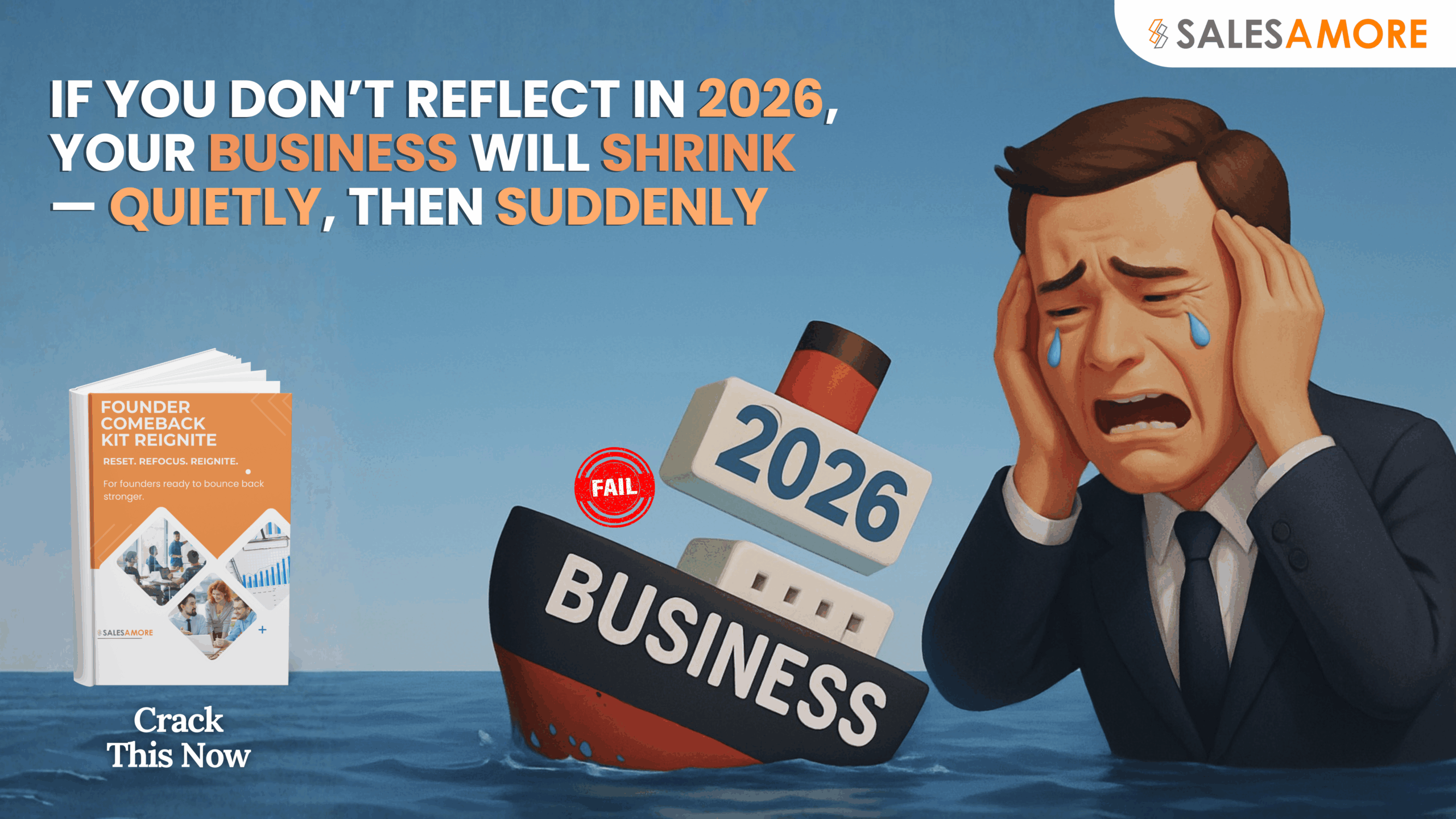
Why Founder Reflection Stops Business Failure
If You Don’t Reflect in 2026, Your Business Will Shrink — Quietly, Then Suddenly I Lost Everything – Twice. At 25, I had already failed once.At 40, I lost everything again. The first time, I blamed the market.The second time, I blamed my team.But the truth?It was me. I stopped reflecting. I stopped asking the hard questions.I stopped listening – to myself, my customers, and my people. And that’s how most businesses die.Not with a crash. Not overnight.But quietly, in the comfort of routine… until one day, the silence breaks – and it’s already too late. Reflection: The Founder’s Most Ignored Superpower In 25 years of building, breaking, and rebuilding businesses, I’ve learned this: The difference between a founder who survives and one who scales is reflection. Reflection isn’t sitting with your thoughts.It’s sitting with your truth. It’s asking :- What’s working and what’s quietly slipping? Have I built a sales system or am I still running on adrenaline? Am I managing people, or inspiring performance? When founders skip reflection, they drift from vision to survival mode – chasing leads, managing fires, and losing sight of their growth rhythm. And that’s when businesses begin to shrink. First in energy.Then in innovation.Then in numbers. Until one day, the founder realizes – the product didn’t fail, sales did. Founder Reflection to Sales Comeback Because here’s the truth no one tells you —98% of startups don’t fail. Sales does. It’s rarely the idea.It’s not the funding.And it’s almost never the product. They die because of Sales Failure — inconsistent cash flow, weak pipelines, and no repeatable system. When you can’t turn interest into income, you run out of time, energy, and belief. Every pivot, every dream, every new launch depends on one thing: The ability to sell predictably. That’s why founders must stop thinking like operators — and start acting like Sales Architects — designing systems that create consistent revenue, even when everything else is uncertain. The Pattern of Every Comeback Every founder comeback I’ve witnessed (and lived) followed the same rhythm: 1️⃣ Reality Check – Admit it’s not the market, it’s the mechanism.2️⃣ Reflection – Go back to when things worked. What did you do differently?3️⃣ Rebuild – Recreate that energy with clarity and structure.4️⃣ Scale – Automate what works and amplify with focus. That’s exactly what the ACTIONS™ Framework does — it turns chaos into clarity and reflection into revenue. ACTIONS stands for:Awareness | Creation | Technique | Implementation | Opportunities | Networking | Scale It’s not theory — it’s 25 years of mistakes, lessons, and tested systems put into motion. I Know This Works – Because I Lived It I’ve failed. Twice.Lost everything. Twice.And both times, I rebuilt – through sales. Not just selling products – but creating a repeatable sales rhythm. That rhythm became Salesamore. A place where founders stop guessing and start growing — with sales systems that are predictable, scalable, and personal. If you’ve been there, you know.That sinking feeling when leads dry up, when your team loses momentum, when your energy fades.That’s not failure. That’s the silence before reflection. And if you listen to it – you can still rebuild. Ready to Reflect Before It’s Too Late? 📘 Here’s something to get you started —Founder Reflection Guide. It’s not a checklist — it’s a mirror. It helps you reflect, reset, and reconnect to your winning rhythm.Drop your email in the comments, and we’ll send it straight to you. Or better yet… Book a free consultation call with us at SalesamoreLet’s turn your reflection into a roadmap — and your comeback into a system. 👉 https://salesamore.com/consultation/ Because 2026 won’t wait.Reflect now — or your business will shrink quietly…until one day, it’s suddenly gone. Join 10k+ Entrepreneurs To get valuable free insights deliver straight to your inbox Related Posts B2B Sales Cracked! In-Depth Analysis & Tips How To Convert Leads into Customers 5 Strategies for Excelling in B2B Customer Relationship Management 10 Tips for SMB Success in B2B: Advice from Experts About the Author As an entrepreneur, I have gained great exposure to B2B sales strategies, processes, and practices as CEO of Salesamore. I am known for a strict approach and do not deviate from my target, which is to get my sales figures up by means of lead generation, demand generation, and Account-Based Marketing (ABM). Through the deep understanding of Go-To-Market (GTM) strategies, I have been branded by the corporate sector as the one who turns opportunities into reality and the one who brings magic to the whole process. I am thrilled to help startups polish their sales methods and smash the competition with unprecedented results. We hope you enjoyed reading this blog! Don’t forget to check out these valuable resources to stay connected and explore more about what we have to offer: Subscribe to My YouTube Channel: Stay updated with the latest videos, tutorials, and insights by subscribing to our YouTube channel. Visit Our Website: Learn more about our services, solutions, and how we can help you achieve your goals by visiting our official website. Watch Our Featured Video (VSL): Don’t miss our featured video! Click here to watch and gain valuable insights.

Quality vs Quantity Leads: A B2B Sales Guide
You Don’t Need 1,000 Leads to Hit Your Revenue Goals You Need the Right 100, Nurtured the Right Way Why chasing quantity over quality is costing you more than you think and how focusing on the right 100 leads can transform your sales game. Let’s be honest… Everyone has gone through the experience of finding (or having someone give you) hundreds or even thousands of “leads.” Exciting, and daunting. The sales team is all jazzed up and excited, outreach emails are being sent, the dashboards are lighting up. But… let’s be honest… not all leads are equal: Having 1000 names on your list does not mean you are any closer to balancing your revenue goal, in fact, it could be moving you further away. Here is why! By stretching your effort and focus across too many leads you cheapen the quality of your energy and effort materials. You are into chasing interest, and not creating intention. The Power of the Right 100 Imagine this instead you have just 100 leads.But these are not random contacts. These are handpicked prospects who: Fit your ideal customer profile Actually have the problem you solve Are you ready to have real business conversations Now, your sales team isn’t busy “following up” endlessly. They’re engaging. They’re consulting. They’re building trust. That’s the magic of quality. It turns your outreach into relationships and your conversations into conversions. Nurturing: The Missing Piece Here’s a quick story Last year, a founder who we were collaborating with had 1,800 cold leads just sitting there. No follow ups, no conversation, just a giant list of contacts collecting dust. We assisted him with segmenting and identifying his top 120 prospective leads based on the best potential to convert. Then we built a nurture strategy to do the following — personalized outreach, meaningful touchpoints, and valuable follow-ups. In 6 short weeks, those 120 leads became 23 booked demos, 7 conversions, and a predictable pipeline going into the next quarter. Not because we added more leads. But because we focused on better leads, and nurtured them more effectively. Understanding what “Nurturing the Right Way” means It does not involve inundating your prospects with emails every two days. It pertains to understanding your prospects’ experience and reaching out at the right moment with the precise message. Here are some illustrations of nurturing well: Providing insights, instead of selling products Asking intelligent questions, instead of a standard pitch Offering value, prior to asking for something. When you nurture well, your prospects do not feel “sold to,” instead, they feel understood.And that is what results in conversions. The transition you need to consider If you’ve been sizing up your achievement on your lead list, then you need to make a transition. The future of B2B selling is not loud, it’s smart. It’s about accessing data, context, and empathy to next reach the right people and scale those people in a predictably manner. So stop being obsessed with the number. Start building relationships.Because when you have the right 100 people … you don’t just hit your growth expectations, you exceed them. Free webinar: Receive free advice that will keep you from making mistakes. Reserve your seat for a free webinar Conclusion You don’t need 1,000 leads to grow your business. You need 100 high-quality leads, which are nurtured purposefully with insights and directed with strategies to build trust. Quantity fills the pipe. Quality drives growth. Ready to Transform the Way You Sell? If you’re ready to build a smarter, more predictable sales system that actually works let’s talk. Book a free consultation call with our experts at Salesamore: https://salesamore.com/consultation/ About the Author : Join 10k+ Entrepreneurs To get valuable free insights deliver straight to your inbox Related Posts B2B Sales Cracked! In-Depth Analysis & Tips How To Convert Leads into Customers 5 Strategies for Excelling in B2B Customer Relationship Management 10 Tips for SMB Success in B2B: Advice from Experts As an entrepreneur, I have gained great exposure to B2B sales strategies, processes, and practices as CEO of Salesamore. I am known for a strict approach and do not deviate from my target, which is to get my sales figures up by means of lead generation, demand generation, and Account-Based Marketing (ABM). Through the deep understanding of Go-To-Market (GTM) strategies, I have been branded by the corporate sector as the one who turns opportunities into reality and the one who brings magic to the whole process. I am thrilled to help startups polish their sales methods and smash the competition with unprecedented results. We hope you enjoyed reading this blog! Don’t forget to check out these valuable resources to stay connected and explore more about what we have to offer: Subscribe to My YouTube Channel: Stay updated with the latest videos, tutorials, and insights by subscribing to our YouTube channel. Visit Our Website: Learn more about our services, solutions, and how we can help you achieve your goals by visiting our official website. Watch Our Featured Video (VSL): Don’t miss our featured video! Click here to watch and gain valuable insights.
Why You Think Cold Emails Don’t Work (And How to Fix It)
Cold Emails Aren’t Dead – They’re Just Lazy Why Most Outreach Fails Before the First Click (and How to Fix It) Let’s get one thing straight cold emails are not dead. They’re just being sent by people who forgot how to talk like humans. Every time someone says, “Cold emails don’t work anymore,” what they really mean is my copy was boring, my targeting was off, and my follow-up was robotic. The truth? Cold emails still work just not the way they used to. The Actual Issue Is Not Cold Email – It’s Cold Communication Most outreach fails way before the first click happens because it is wrong from the beginning. Here is the typical scenario:You open your inbox and see a long generic email with: A terrible intro that is straight out of ChatGPT in 2019. A value prop that is irrelevant to your business. A huge block of text awkwardly asking you to meet. You delete the email. Immediately.Because it feels like someone is selling to you, not speaking to you. That is what makes for terrible outreach; and that is how you wind up in the cold email graveyard — thousands of messages that never stood a chance. The Transition: From Cold to Contextual When you want someone to respond to the cold email that you sent, it needs to feel like a warm handshake and not just another pitch. Here’s how you can accomplish that: 1. Do your research.Know the reader. Know their pain, their market, their challenges.Personalisation is not “Hi [First Word]” it’s about being relevant for the reader. 2. Get rid of the corporate bullshit. Human beings don’t communicate in the same way that you wrote the press release. They communicate like… human beings.Write like you were text message a colleague waiting for them to input, not like you were submitting a formal proposal. 3. Provide something of value first.Stop writing “Can we hop on a quick call?” and provide the reader with a reason to care.Provide the answer: “I saw that your sales team expanded recently – here’s a quick thought to help them book more demos in less time.” 4. Respect the inbox.Short is better. If your email takes more than 10 seconds to scan, it’s too long.Your responsibility is curiosity > clutter. Real Talk: Cold Email Is a Game of Relevance, Not Volume Sending 1000 bad emails won’t beat 50 good ones. The best campaigns don’t feel like “campaigns.” They feel like conversations. People don’t reply to emails. They reply to interest. To relevance. To human connection. So stop spamming. Start communicating. Free webinar: Receive free advice that will keep you from making mistakes. Reserve your seat for a free webinar The Solution: Write With Purpose Before you click “send,” ask yourself:Would I reply to this? Am I being thoughtful and offering valuable information, or just asking for something and their time? Does this email add value in 20 seconds or less? If the answer is no rewrite it.Cold emailing is not about tricks or templates. It is about intention. And when you intentionally change from “get” to “give,” that’s when people begin responding. Conclusion Cold emails aren’t dead. But lazy ones are buried deep. The inbox is still the most powerful gateway to new opportunities. You just have to stop knocking like a stranger. Start talking like a partner. Offer value like a friend. And your open rates and reply rates will tell the story. Final Thought If your cold emails aren’t landing, let’s fix them. Book a free consultation call with Salesamore and learn how to turn your outreach into conversations that actually convert. Book Your Free Consultation Now Join 10k+ Entrepreneurs To get valuable free insights deliver straight to your inbox Related Posts B2B Sales Cracked! In-Depth Analysis & Tips How To Convert Leads into Customers 5 Strategies for Excelling in B2B Customer Relationship Management 10 Tips for SMB Success in B2B: Advice from Experts About the Author As an entrepreneur, I have gained great exposure to B2B sales strategies, processes, and practices as CEO of Salesamore. I am known for a strict approach and do not deviate from my target, which is to get my sales figures up by means of lead generation, demand generation, and Account-Based Marketing (ABM). Through the deep understanding of Go-To-Market (GTM) strategies, I have been branded by the corporate sector as the one who turns opportunities into reality and the one who brings magic to the whole process. I am thrilled to help startups polish their sales methods and smash the competition with unprecedented results. We hope you enjoyed reading this blog! Don’t forget to check out these valuable resources to stay connected and explore more about what we have to offer: Subscribe to My YouTube Channel: Stay updated with the latest videos, tutorials, and insights by subscribing to our YouTube channel. Visit Our Website: Learn more about our services, solutions, and how we can help you achieve your goals by visiting our official website. Watch Our Featured Video (VSL): Don’t miss our featured video! Click here to watch and gain valuable insights.
