
Sales Automation for SMBs: A Guide to Compete & Win The Big Gap That’s Shrinking Fast Let’s be honest. For years, small and medium-sized businesses (SMBs) have watched enterprise sales teams dominate the market with massive budgets, bigger tech stacks, and armies of SDRs. They’ve had the advantage more data, more people, more tools. But things are changing. Today, automation has become the great equalizer. With the right systems in place, even a 10-person SMB can compete with a 100-person enterprise sales team. Not by working harder but by working smarter. The Truth: Enterprise is More Scalable, SMBs are More Agile Enterprise sales teams often move more like a cruise ship than anything else – big; but slow to change course. SMB is more like a speedboat dynamism – you can try things, change course, and customize faster.What’s the issue? Manual labor eats into that speed. Your sales reps are spending hours writing follow up emails, updating their CRM, or determining which prospects to dial in on. This is where automation can come in. It not only moves the labor off your plate for an admin task, it gives you clarity on what actually creates revenue. Step 1: Automate the Repetitive Tasks Examine the small, repetitive tasks that are dragging your sales team down:Sending follow-up emails by hand Transferring data between tools Getting visibility into leads across spreadsheets Setting a reminder to follow up on a warm lead Automation tools can do this on your behalf, and they will do it faster and with less errors.From syncing data into your CRM to sending personalized messages at the right time, automation enables your team the ability to maintain consistency without being robotic.Consistency is your competitive advantage now. Step 2: Create an Intelligent Outreach System While larger companies have built out fancy, expensive marketing automation platforms and large content teams, rarely do you need anything like that.All you need is a clean, repeatable system. An example of a simplified, but effective system might look like this: Create your Ideal Customer Profile (ICP) – basically, they’re the type of people who need your offer. Automated personalized outreach on LinkedIn and email. Workflow for follow-up and reminders for your outreach. Tracking responses, clicks and replies – automatically. In this structure, you and your team are prioritizing conversations, not following up on replies. Step 3: Personalize at Scale Enterprise sales frequently become ensnared in bureaucracy. Messages come across as cold, generic, and overly polished. You can win with authenticity! Automation tools today allow you to personalize messages by company size, role, and pain points, without manually rewriting every email. It is not about sending more.It is about sending more effectively sending the right message, to the right person, at the right time. Free webinar: Receive free advice that will keep you from making mistakes. Reserve your seat for a free webinar Step 4: Use Data to Guide Decisions Most SMBs rely on gut feeling “this campaign feels like it’s working.” But automation gives you real data. You’ll know: Which messages get replies Which channels convert best When your prospects are most active You can adjust instantly no waiting for quarterly reviews or long reports like big teams do.When data drives your outreach, your growth becomes predictable. Step 5: Scale Without Scaling Headcount This is the real magic of automation. You don’t need to hire five more reps to double your output. Automation multiplies your effort not your payroll. It helps you maintain human relationships at machine speed. And when every message, follow-up, and handoff is handled by a system, your small team performs like an enterprise one. Conclusion: Competing on Systems, Not Size Automation doesn’t make you less human it makes your team more available to the people who matter most. The playing field has shifted. Today, SMBs can compete head-to-head with large enterprises not because they have more people, but because they’ve built smarter systems. The real difference isn’t size. It’s strategy, speed, and structure. Ready to Build Your Own Growth Engine? At SalesAmore, we help SMBs design sales systems that turn automation into a predictable pipeline without losing the human touch. We build everything from ICP clarity and outreach sequences to follow-up automation and retargeting systems so your team focuses only on what matters: closing deals. If you’re ready to compete with the big players (and win), Book your free consultation today: www.salesamore.com/consultation Join 10k+ Entrepreneurs To get valuable free insights deliver straight to your inbox Related Posts B2B Sales Cracked! In-Depth Analysis & Tips How To Convert Leads into Customers 5 Strategies for Excelling in B2B Customer Relationship Management 10 Tips for SMB Success in B2B: Advice from Experts How fast do you want to grow, and what’s standing in the way? Ready to skip the hiring queue and start seeing qualified leads in your inbox? Let’s talk → www.salesamore.com About the Author As an entrepreneur, I have gained great exposure to B2B sales strategies, processes, and practices as CEO of Salesamore. I am known for a strict approach and do not deviate from my target, which is to get my sales figures up by means of lead generation, demand generation, and Account-Based Marketing (ABM). Through the deep understanding of Go-To-Market (GTM) strategies, I have been branded by the corporate sector as the one who turns opportunities into reality and the one who brings magic to the whole process. I am thrilled to help startups polish their sales methods and smash the competition with unprecedented results. We hope you enjoyed reading this blog! Don’t forget to check out these valuable resources to stay connected and explore more about what we have to offer: Subscribe to My YouTube Channel: Stay updated with the latest videos, tutorials, and insights by subscribing to our YouTube channel. Visit Our Website: Learn more about our services, solutions, and how we can help you achieve your goals by visiting our official website. Watch Our Featured Video (VSL): Don’t miss our featured video! Click here to watch and

Building B2B Pipeline: Why Consistency Beats Creativity
Why Consistency Beats Creativity in Building B2B Pipeline When most founders or sales teams think about building pipeline, they start by asking: “What new trick can we try?” A clever subject line. A flashy piece of content.A creative ad campaign. And while creativity has its place, it’s not what builds a predictable B2B sales pipeline. The companies that win aren’t the ones with the catchiest ideas. They’re the ones that show up every single day. The Trap of Creativity-First Selling I still remember working with a startup that poured weeks into creating “the perfect campaign.” They designed beautiful graphics, wrote witty copy, and brainstormed clever hooks. It launched with excitement. The results? A few curious clicks… and then silence. What went wrong? They had relied on a burst of creativity instead of building a consistent system. Creativity grabs attention, but consistency earns trust. And in B2B sales, trust is what opens calendars and closes deals. Why Consistency is More Important Than Ever Your buyers are busy. Each day, buyers are hit with hundreds of messages. One aerial messaging prompt or perfect email can change their mind only so much. But, repeated, steady, value-based touches do. Let’s think for a moment: One post on LinkedIn may get a double-tap. But posting on those platforms consistently, meaning 3–4x a week over the long period, shows authority. One cold email or message may get ignored. A 6-touch outreach sequence, that is structured makes for conversations. One more offer follow-up can feel nagging. But consistent, thoughtful follow-ups show persistence and reliability. Continuity turns strangers into warm prospects. And lets you stay in their periphery until the moment is right. The Pipeline Is a Marathon, Not a Sprint Building a B2B pipeline is like training for a marathon. You don’t get fit from one intense workout. You get fit by showing up, day after day, even when it feels repetitive. Sales is the same. The teams that treat outreach, follow-ups, and content as a discipline not a one-time campaign are the ones with full pipelines. Creativity Still Has a Role Now, this doesn’t mean creativity is useless. A creative hook, a smart piece of content, or a unique campaign can boost results. But creativity only works when it’s layered on top of consistency. It’s the seasoning not the main course. Without consistency, creativity is just noise. With consistency, creativity makes your pipeline stronger. How to Put Consistency Into Action If you want a pipeline that actually works, start here: Set a cadence – Decide how often you’ll post, email, and follow up. Then stick to it. Build sequences, not one-offs – Plan 6–8 touchpoints per prospect across email, LinkedIn, and content. Document your process – Outreach should feel like a machine, not a guessing game. Measure weekly – Track replies, meetings booked, and conversions. Adjust slowly, not wildly. Play the long game – Remember: prospects buy when they’re ready, not when you’re creative. Free webinar: Receive free advice that will keep you from making mistakes. Reserve your seat for a free webinar Final thoughts The greatest myth in B2B sales relies on the need for continual creativity to be successful. The reality is more straightforward: you need to show up over and over with enough consistency.Creativity may generate attention for a brief time, but it is consistency that keeps you in it, long enough to build trust and generate conversations and deals. If you are looking to build a pipeline, stop looking for the next “golden idea”.Join us by ensuring that you are showing up, consistently, repeatedly and with some value.That’s what fills calendars and creates wins. At SalesAmore, we help B2B founders and teams build predictable sales engines by replacing guesswork with systems. Our outreach frameworks, content plans, and multi-channel systems were designed for one thing: consistency + time = results.If you are done hoping for fortunate changes to happen and want to build a reliable pipeline, let’s chat. Book your free consultation today: www.salesamore.com/consultation Join 10k+ Entrepreneurs To get valuable free insights deliver straight to your inbox Related Posts B2B Sales Cracked! In-Depth Analysis & Tips How To Convert Leads into Customers 5 Strategies for Excelling in B2B Customer Relationship Management 10 Tips for SMB Success in B2B: Advice from Experts About the Author As an entrepreneur, I have gained great exposure to B2B sales strategies, processes, and practices as CEO of Salesamore. I am known for a strict approach and do not deviate from my target, which is to get my sales figures up by means of lead generation, demand generation, and Account-Based Marketing (ABM). Through the deep understanding of Go-To-Market (GTM) strategies, I have been branded by the corporate sector as the one who turns opportunities into reality and the one who brings magic to the whole process. I am thrilled to help startups polish their sales methods and smash the competition with unprecedented results. We hope you enjoyed reading this blog! Don’t forget to check out these valuable resources to stay connected and explore more about what we have to offer: Subscribe to My YouTube Channel: Stay updated with the latest videos, tutorials, and insights by subscribing to our YouTube channel. Visit Our Website: Learn more about our services, solutions, and how we can help you achieve your goals by visiting our official website. Watch Our Featured Video (VSL): Don’t miss our featured video! Click here to watch and gain valuable insights.
The New Rules for B2B Buyer Attention
The New Rules of Buyer Attention: How to Stand Out in a Saturated B2B Market Why Buyer Attention Is So Hard Today B2B buyer attention: Take a moment to reflect on your own inbox. You likely receive more than 20 cold emails, LinkedIn requests, advertisements, or newsletters each day. Almost all sounds the same – “We can help you to grow, and let’s schedule a call. “Here is our awesome product.”Now think about your prospects. They receive more than you.Is there any surprise in them not replying? The fact is: buyers do not lack options, but they fail to have time and trust.To capture their attention as a buyer, you do not have to be louder, but you do need to be smart. Rule 1: Talk About Their Problems, Not Your Product Buyers don’t care about your features. They care about solving their problems. Instead of saying: “We’re the #1 platform for automation.” Say: “We help sales teams cut their follow-up time in half.” Clear, problem-first messages always get noticed. Rule 2: Make It Personal (For Real) Adding a name in an email isn’t personalization. Showing that you’ve done your homework is. Example: “I noticed you just raised funding. Many Series A companies struggle with scaling outbound. Here’s one way we helped a similar company fix that.” That feels real. That earns a reply. Rule 3: Use More Than One Channel Your buyers are on LinkedIn, email, events, and even WhatsApp groups. If you show up only in one channel, you’ll get lost. But here’s the key your message must be the same everywhere. If you say one thing on LinkedIn and another in email, you confuse buyers. And confused buyers don’t buy. Rule 4: Keep It Short and Clear Attention spans are short. If your message takes too long to explain, it won’t get read. Best practice: 2–3 short sentences that clearly say who you help, how you help, and the outcome. Your first goal is not to sell it’s to get a reply. Rule 5: Show Proof, Not Promises Anyone can say, “We’ll help you grow.” Buyers believe numbers, examples, and client results. Example: “We helped a SaaS company increase booked calls by 40% in 3 months.” Proof builds trust faster than any pitch. Free webinar: Receive free advice that will keep you from making mistakes. Reserve your seat for a free webinar Rule 6: Stay Consistent One LinkedIn post won’t get you clients. One cold email won’t fill your pipeline. The companies winning today are the ones that show up every week with content, outreach, and follow-ups. Consistency beats luck. Every single time. Conclusion The B2B market is more crowded than ever. But attention isn’t about being louder. It’s about being relevant, personal, simple, and consistent. When you follow these new rules, you don’t just “get seen.” You earn trust — and trust turns into sales. At SalesAmore, we help businesses grab buyer attention the right way — with systems that cut through the noise and create real conversations. Want to see how it works for your business? Book your free consultation today: www.salesamore.com/consultation Join 10k+ Entrepreneurs To get valuable free insights deliver straight to your inbox Related Posts B2B Sales Cracked! In-Depth Analysis & Tips How To Convert Leads into Customers 5 Strategies for Excelling in B2B Customer Relationship Management 10 Tips for SMB Success in B2B: Advice from Experts About the Author As an entrepreneur, I have gained great exposure to B2B sales strategies, processes, and practices as CEO of Salesamore. I am known for a strict approach and do not deviate from my target, which is to get my sales figures up by means of lead generation, demand generation, and Account-Based Marketing (ABM). Through the deep understanding of Go-To-Market (GTM) strategies, I have been branded by the corporate sector as the one who turns opportunities into reality and the one who brings magic to the whole process. I am thrilled to help startups polish their sales methods and smash the competition with unprecedented results. We hope you enjoyed reading this blog! Don’t forget to check out these valuable resources to stay connected and explore more about what we have to offer: Subscribe to My YouTube Channel: Stay updated with the latest videos, tutorials, and insights by subscribing to our YouTube channel. Visit Our Website: Learn more about our services, solutions, and how we can help you achieve your goals by visiting our official website. Watch Our Featured Video (VSL): Don’t miss our featured video! Click here to watch and gain valuable insights.
Automation Mistakes That Kill Your Sales Pipeline (And How to Avoid Them)
Automation Mistakes That Kill Your Sales Pipeline (And How to Avoid Them) Sales automation sounds like a dream, right? Imagine: your emails go out on time, follow-ups never slip, and your pipeline fills itself while you focus on closing deals. That’s the promise every automation tool sells you.But here’s the reality most founders and sales teams face: instead of creating more opportunities, automation often ends up killing their pipeline. Why? Because they fall into the same traps that make their outreach look robotic, irrelevant, and forgettable.Let me tell you a story you might recognize… The Excited Founder A founder launches their first sales automation campaign. They upload a list of 5,000 prospects, press “send”, and wait. Some opens trickle in, but replies? Crickets. Instead of meetings booked, their domain reputation drops. The mistake? Treating prospects like a list, not like people.When an email looks mass produced, it ends up in spam or worse, just gets deleted without thought. The solution: Personalization at scale. Small personalized touches, like mentioning a recent company announcement or their title, is the difference between being ignored and starting a conversation. The Spray-and-Pray Sales Team Another team decides to automate outreach without defining who they actually want to sell to. They target “all SaaS companies.” The result? Lots of wasted emails and annoyed prospects who were never a good fit. The mistake? Automating without an Ideal Customer Profile (ICP). Without clarity, automation just amplifies noise. The fix: Get laser-focused on your ICP industry, company size, role, and pain points. Then automate outreach only to those who actually match. The Follow-Up Fatigue We’ve all seen it: endless automated follow-ups that feel like a robot chasing you down. “Just checking in… Did you see my last email… Should I close your file?” Prospects don’t engage they block. The mistake? Over-automating follow-ups. Instead of building trust, you burn bridges. The fix: Blend automation with human touch. Automate reminders, but add personal messages like a quick video, voice note, or a thoughtful LinkedIn comment. That’s what turns persistence into connection. The Blind Campaign Runner A sales rep launches an automated sequence and lets it run. Some people open, a few click, but no one tracks what’s happening. The rep keeps sending the same stale messages, wondering why results never improve. The mistake? “Set it and forget it” campaigns. Automation isn’t magic—it decays if you don’t optimize. The fix: Keep testing. Track open rates, reply rates, and booked calls. Improve your subject lines, CTAs, and touchpoints over time. Free webinar: Receive free advice that will keep you from making mistakes. Reserve your seat for a free webinar The Content Disconnect One founder automated 7 emails per lead… but every message was a pitch. No value. No insights. No content to build credibility. Prospects didn’t just ignore them—they unsubscribed. The mistake? Outreach with no content support. Buyers don’t want to be sold to—they want to learn, trust, and then decide. The fix: Pair automation with content. Case studies, playbooks, and simple insights turn cold leads into warm conversations. The Wrong Scoreboard Many sales leaders celebrate the wrong numbers: “We sent 10,000 emails this week!” But volume isn’t impact. If replies are low and meetings aren’t booked, the automation is failing—no matter how busy the system looks. The mistake? Measuring activity, not outcomes. The fix: Focus on the real metrics—reply rates, meetings booked, deals created. That’s what proves automation is actually fueling growth. Conclusion Automation can be your greatest leverage for growth, or it can be the reason your pipeline runs dry. The difference is entirely dependent on your approach. If you think of automation as a machine to enhance personalization, consistency, and strategy it will generate you more qualified meetings than manual outreach would. Use blindly, and you are automating failure at rate. CTA If you’re ready to stop guessing and start building an outreach system that actually works, you don’t need more tools you need the right playbook. At SalesAmore, we design automation systems that keep your pipeline alive, predictable, and growing. Want to see how it works for your business? Book your free consultation today: 👉 www.salesamore.com/consultation Join 10k+ Entrepreneurs To get valuable free insights deliver straight to your inbox Related Posts B2B Sales Cracked! In-Depth Analysis & Tips How To Convert Leads into Customers 5 Strategies for Excelling in B2B Customer Relationship Management 10 Tips for SMB Success in B2B: Advice from Experts About the Author As an entrepreneur, I have gained great exposure to B2B sales strategies, processes, and practices as CEO of Salesamore. I am known for a strict approach and do not deviate from my target, which is to get my sales figures up by means of lead generation, demand generation, and Account-Based Marketing (ABM). Through the deep understanding of Go-To-Market (GTM) strategies, I have been branded by the corporate sector as the one who turns opportunities into reality and the one who brings magic to the whole process. I am thrilled to help startups polish their sales methods and smash the competition with unprecedented results. We hope you enjoyed reading this blog! Don’t forget to check out these valuable resources to stay connected and explore more about what we have to offer: Subscribe to My YouTube Channel: Stay updated with the latest videos, tutorials, and insights by subscribing to our YouTube channel. Visit Our Website: Learn more about our services, solutions, and how we can help you achieve your goals by visiting our official website. Watch Our Featured Video (VSL): Don’t miss our featured video! Click here to watch and gain valuable insights.

Why Your Sales Team Should Think Like Content Creators
Why Your Sales Team Should Think Like Content Creators Introduction: The New Reality of Sales The way B2B sales work has changed forever. Buyers don’t wait for your cold calling anymore. They’re on LinkedIn, seeing what thought leaders are saying, reading posts, and looking for social proof long before they hit demo.And here’s the truth: your sales team isn’t competing with other sales reps; they’re competing with content. This is why the best performing sales teams no longer just call and email. They do Content-driven sales which builds trust, informs buyers, and starts conversations. In short, they are thinking as content creator 1. Content Builds Trust Before the First Conversation In B2B sales, trust is everything. Prospects won’t take a meeting unless they feel you can actually help them. Cold pitches alone don’t create trust but content does.When your sales reps share: Short LinkedIn posts about solving real customer pain points, Case studies showing measurable results, Actionable tips or checklists your ICP can use right now, they establish credibility before the first outreach message ever lands. Think of content as your sales team’s digital handshake. It builds familiarity before they even say hello. 2. Content Makes Outreach Warmer and More Effective Here’s the problem with traditional cold outreach: it feels random. But when a prospect has already seen a rep’s post on LinkedIn or read their insights, outreach feels personal and natural. For example: Instead of sending a generic email, your rep can write: “Hi [First Name], I noticed you liked my post on [topic]. Many leaders I talk to are facing similar challenges. Curious how are you currently handling this at your company?”That one piece of content made the outreach warmer, contextual, and more likely to get a reply. 3. Content Attracts Inbound Opportunities Cold outreach pushes. Content pulls. When your reps post consistently, they create digital touchpoints that bring buyers to them. Think about it: A LinkedIn post could spark a comment from a decision-maker. A case study might get shared inside a Slack group. A helpful video could be bookmarked and later trigger a meeting request. Instead of always chasing, your sales team starts attracting prospects into conversations. 4. Content Scales Sales Efforts Without Scaling Headcount A sales call reaches one person. A sales post reaches hundreds or even thousands. This is why content is a scalable sales lever. Instead of adding more reps to grow outreach, you amplify your existing team’s voices with consistent, value-driven content. And the best part? Content works 24/7. A post from last week could still generate leads today. Free webinar: Receive free advice that will keep you from making mistakes. Reserve your seat for a free webinar 5. Content + Outreach = A Predictable Sales Engine Content alone won’t replace outreach. Outreach alone won’t build long-term trust. But together, they create a predictable system for generating meetings. Here’s a simple playbook your team can use: Post educational content 3–4 times a week (tips, stories, frameworks). Engage with ICP’s posts and comments daily. Use content interactions as natural entry points for outreach. Nurture leads with case studies, videos, or insights until they’re ready. This turns LinkedIn, email, and conversations into a sales pipeline machine. Conclusion: Sellers Are the New Influencers Your buyers don’t want another cold pitch. They want insights, proof, and partners who understand their challenges.When your sales team thinks like content creators, they don’t just sell—they educate, attract, and build trust at scale.And in today’s B2B world, that’s the difference between a struggling pipeline and a predictable revenue engine. Build Your Sales Engine With Content + Outreach If you’re ready to turn your sales team into trusted advisors who attract and convert through content-driven outreach, let’s talk. Book your FREE consultation today: www.salesamore.com/consultation Join 10k+ Entrepreneurs To get valuable free insights deliver straight to your inbox Related Posts B2B Sales Cracked! In-Depth Analysis & Tips How To Convert Leads into Customers 5 Strategies for Excelling in B2B Customer Relationship Management 10 Tips for SMB Success in B2B: Advice from Experts About the Author As an entrepreneur, I have gained great exposure to B2B sales strategies, processes, and practices as CEO of Salesamore. I am known for a strict approach and do not deviate from my target, which is to get my sales figures up by means of lead generation, demand generation, and Account-Based Marketing (ABM). Through the deep understanding of Go-To-Market (GTM) strategies, I have been branded by the corporate sector as the one who turns opportunities into reality and the one who brings magic to the whole process. I am thrilled to help startups polish their sales methods and smash the competition with unprecedented results. We hope you enjoyed reading this blog! Don’t forget to check out these valuable resources to stay connected and explore more about what we have to offer: Subscribe to My YouTube Channel: Stay updated with the latest videos, tutorials, and insights by subscribing to our YouTube channel. Visit Our Website: Learn more about our services, solutions, and how we can help you achieve your goals by visiting our official website. Watch Our Featured Video (VSL): Don’t miss our featured video! Click here to watch and gain valuable insights.
How to Build an AI Sales Engine from Scratch
From Prospecting to Closing: How to Build a Full Sales Engine with AI + Automation Why You Need More Than Just “Leads” Why You Need More Than Just “Leads” Most businesses think sales is all about getting more leads. But here’s the truth: leads are only the starting point. Without a system that takes prospects from first touch → nurturing → meeting → closing, your pipeline will always feel broken. That’s where AI + automation comes in. It doesn’t replace human selling — it makes the entire process smoother, faster, and more predictable. In this blog, let’s walk through how to build a full sales engine that runs on AI and automation, step by step. Step 1: Smarter Prospecting with AI Gone are the days of buying random lead lists. Today, AI tools can help you: Find the right ICP (Ideal Customer Profile) Enrich data automatically (job title, email, company insights) Predict who’s most likely to respond Example: Tools like Apollo, Clay, or ZoomInfo can pull verified leads + signals so your outreach isn’t wasted on the wrong people. Step 2: Personalized Outreach at Scale No one replies to generic cold emails anymore. But writing 200 custom emails a day? Impossible.This is where AI shines: Drafts personalized first lines based on LinkedIn posts or company updates Suggests subject lines with the highest open rates Builds multi-touch sequences (email + LinkedIn + follow-ups) Tools like Lemlist, Smartwriter, or Instantly let you scale personalization without burning out. Step 3: Automated Nurturing Sequences Not every prospect is ready to book a call today. AI-powered automation helps you stay on their radar until they are. Auto-send value-driven emails (case studies, guides, insights) Retarget them on LinkedIn with content Score leads based on engagement signals Imagine a prospect downloads your guide today. AI can follow up 3 days later with a personalized tip and then invite them to a webinar all without you lifting a finger. Step 4: Sales Conversations Made Easier When a prospect finally replies, AI can still help you close smarter: Meeting schedulers like Calendly auto-handle booking AI notetakers like Fireflies or Otter.ai capture call highlights Deal intelligence tools analyze conversations and suggest next steps Now your sales team can focus 100% on building trust and handling objections, not admin work. Step 5: Closing Deals with Data AI doesn’t stop at meetings it helps you forecast and close better too. CRM automation updates deal stages in real time AI predicts deal success probability Helps you know which accounts need urgent follow-up This means fewer deals slipping through the cracks and more predictable revenue. Free webinar: Receive free advice that will keep you from making mistakes. Reserve your seat for a free webinar Step 6: Consistency Is the Real Win The biggest advantage of building a sales engine with AI + automation? Consistency. Instead of depending on random outreach sprints or a single superstar rep, you create a repeatable system that finds leads, warms them up, books meetings, and ultimately closes deals all while your team focuses on what humans do best: building relationships and trust. All while your team focuses on what humans do best: relationships and trust. Conclusion AI + automation aren’t just shiny tools they’re the backbone of a modern sales engine. From prospecting to closing, they provide speed, precision, and scale. If your current sales process feels chaotic, it is most likely because you’re missing a system, and in 2025, the companies succeeding in B2B sales will be those that meld human touch and AI-driven systems. Join 10k+ Entrepreneurs To get valuable free insights deliver straight to your inbox Related Posts B2B Sales Cracked! In-Depth Analysis & Tips Step 1: Smarter Prospecting with AI How To Convert Leads into Customers 5 Strategies for Excelling in B2B Customer Relationship Management 10 Tips for SMB Success in B2B: Advice from Experts Hiring an in-house lead generation team gives you control, brand alignment, and a chance to grow internal capability. Your SDRs speak your language, live your culture, and align with your sales team daily. But here’s the tradeoff: you’re building a machine from scratch. Ready to Build Your Sales Engine? Salesamore helps businesses turn outreach chaos into a predictable sales engine by combining smart automation, AI-driven systems, and human strategy.Ready to make your sales process consistent and scalable? Book your free consultation today: www.salesamore.com/consultation About the Author As an entrepreneur, I have gained great exposure to B2B sales strategies, processes, and practices as CEO of Salesamore. I am known for a strict approach and do not deviate from my target, which is to get my sales figures up by means of lead generation, demand generation, and Account-Based Marketing (ABM). Through the deep understanding of Go-To-Market (GTM) strategies, I have been branded by the corporate sector as the one who turns opportunities into reality and the one who brings magic to the whole process. Don’t forget to check out these valuable resources to stay connected and explore more about what we have to offer: Subscribe to My YouTube Channel: Stay updated with the latest videos, tutorials, and insights by subscribing to our YouTube channel. Visit Our Website: Learn more about our services, solutions, and how we can help you achieve your goals by visiting our official website. Watch Our Featured Video (VSL): Don’t miss our featured video! Click here to watch and gain valuable insights.

AI B2B Outreach: A Guide to Booking More Meetings
The Future of B2B Outreach: How AI Agents Are Changing the Game Outreach has always been the engine behind B2B sales. But let’s be honest the way companies have done outreach for the last decade is broken. Endless cold emails, generic LinkedIn messages, and copy-paste scripts don’t cut it anymore. Buyers are smarter, attention spans are shorter, and inboxes are overflowing. That’s where AI agents are stepping in and completely changing the way B2B outreach works. In this blog, we’ll explore how AI-powered outreach is evolving, what it means for founders and sales teams, and how you can leverage this shift to consistently generate qualified meetings. Why Traditional Outreach Is Failing The old way of outreach looks like this: Mass email blasts, hoping someone replies LinkedIn connection requests that sound robotic Sales reps spending hours manually prospecting and following up The result? Low response rates, wasted time, and a frustrated team.The problem isn’t outreach itself — it’s the lack of personalization, speed, and scalability. Enter AI Agents: The New Outreach Partner AI agents are more than just chatbots or scheduling tools. They are intelligent assistants that can handle entire parts of the outreach process for you. Here’s what is making them compelling fiscal agents: Smart Prospecting – AI tools can analyze millions of data points to identify your ideal buyers and build accurate lists faster than any researcher can seriously think. Personalized Outreach at Scale – AI doesn’t need to drive around to read stale templates. Instead, AI coordinates individual outreach messages for each prospect, based on their industry and role, and quarterly or monthly value in any industry. Automated Follow-Up – AI agents don’t forget. They will send valuable follow-ups via LinkedIn and email on time until the conversation begins. Real-Time Learning – AI learns as the responses come in about what is working and what marginally doesn’t, and improves your campaigns week after week. What This Means for Founders & Sales Teams Imagine this: instead of spending 20 hours a week chasing leads, your team spends that time closing deals.With AI agents, you get: A steady flow of qualified leads Consistent meetings booked directly to your calendar More time to focus on strategy and sales conversations Lower customer acquisition costs because outreach is faster and more precise It’s not about replacing humans it’s about freeing them from repetitive work so they can focus on building real relationships. How to Start Using AI in Outreach You don’t need to overhaul your entire system on day one. Start small: Define Your ICP Clearly – AI is only as good as the inputs you give it. Know exactly who you’re targeting. Use AI for Prospecting – Tools like Clay or Apollo with AI enrichment save hours of manual research. Personalize Messages with AI Assistance – Let AI draft outreach emails and DMs, but add a human touch before hitting send. Automate Follow-Ups – Set sequences where AI handles reminders and nudges consistently. Track and Optimize – Measure response rates, meetings booked, and adjust inputs to keep improving. Free webinar: Receive free advice that will keep you from making mistakes. Reserve your seat for a free webinar The Road Ahead We’re just scratching the surface of what AI can do in B2B outreach. Soon, AI agents will: Handle entire conversations before handing off warm leads to sales reps Analyze buyer intent signals in real time and trigger perfectly timed outreach Create hyper-personalized campaigns at scale without sacrificing authenticity The companies that adapt now will have a huge advantage faster pipelines, lower costs, and stronger customer relationships. Conclusion The future of B2B outreach isn’t about blasting more emails. It’s about building a system where AI does the heavy lifting prospecting, personalizing, and following up so your team can focus on what they do best: selling. Outreach is no longer guesswork. With AI agents, it’s predictable, scalable, and built for growth. Final Thoughts At SalesAmore, we help B2B companies design AI-powered outreach systems that consistently book meetings, lower CAC, and drive growth. Book a Free Strategy CallWant to explore how we can align your message, marketing, and sales into one revenue-driving system? Let’s hop on a short discovery call.👉 Book your free strategy session here Join 10k+ Entrepreneurs To get valuable free insights deliver straight to your inbox Related Posts B2B Sales Cracked! In-Depth Analysis & Tips How To Convert Leads into Customers 5 Strategies for Excelling in B2B Customer Relationship Management 10 Tips for SMB Success in B2B: Advice from Experts About the Author As an entrepreneur, I have gained great exposure to B2B sales strategies, processes, and practices as CEO of Salesamore. I am known for a strict approach and do not deviate from my target, which is to get my sales figures up by means of lead generation, demand generation, and Account-Based Marketing (ABM). Through the deep understanding of Go-To-Market (GTM) strategies, I have been branded by the corporate sector as the one who turns opportunities into reality and the one who brings magic to the whole process. I am thrilled to help startups polish their sales methods and smash the competition with unprecedented results. We hope you enjoyed reading this blog! Don’t forget to check out these valuable resources to stay connected and explore more about what we have to offer: Subscribe to My YouTube Channel: Stay updated with the latest videos, tutorials, and insights by subscribing to our YouTube channel. Visit Our Website: Learn more about our services, solutions, and how we can help you achieve your goals by visiting our official website. Watch Our Featured Video (VSL): Don’t miss our featured video! Click here to watch and gain valuable insights.
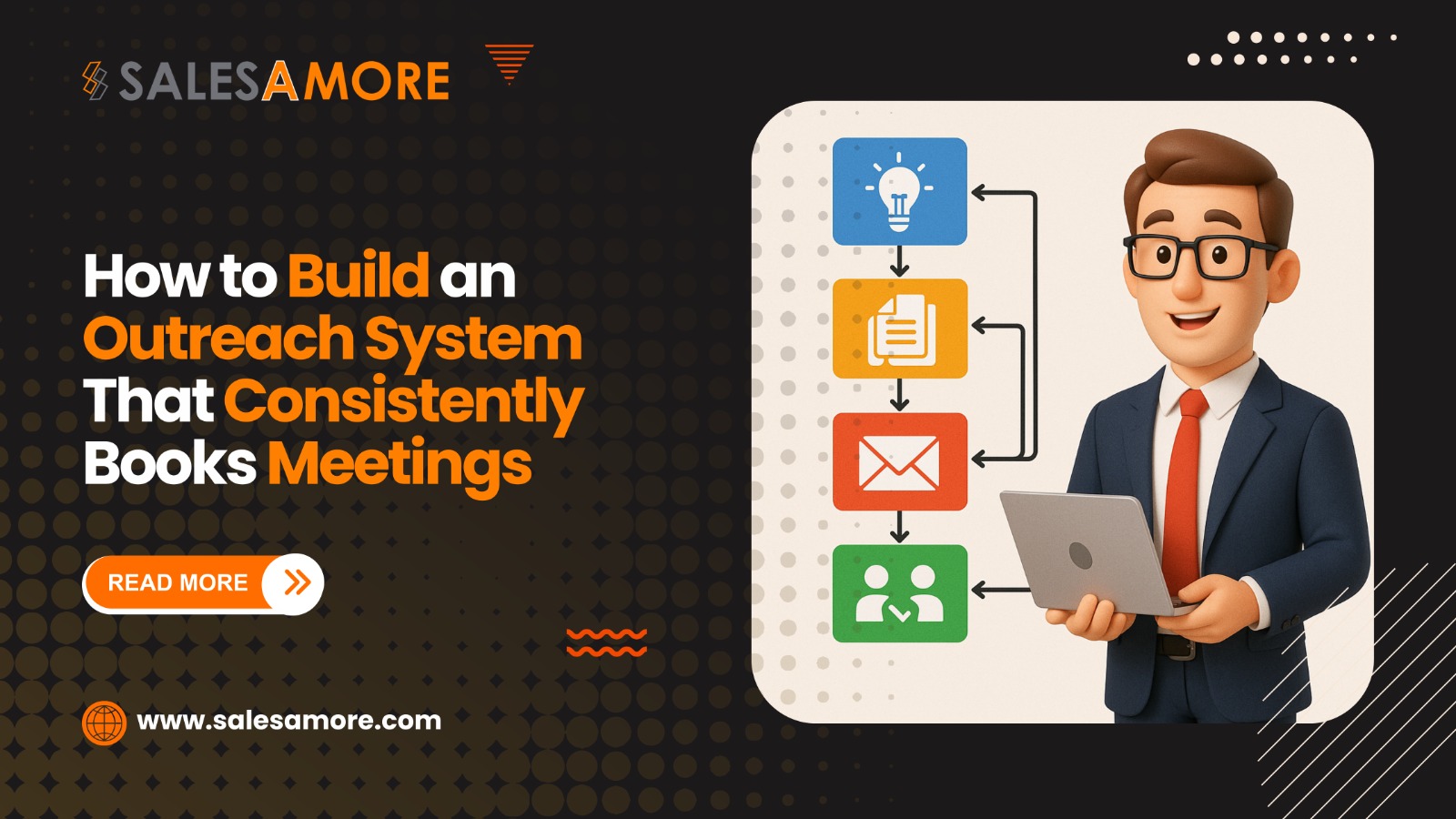
Build an Outreach System That Books Meetings
How to Build an Outreach System That Consistently Books Meetings Outreach System is the oxygen of B2B sales. But the truth is: the majority of founders and sales teams fail because they approach outreach as a one-time task. They send a few cold emails, experiment with LinkedIn for a week, perhaps run ads, and when nothing clicks, they conclude “outbound doesn’t work.” The truth? Outreach only becomes effective if you approach it as a system.A system that operates reliably, blends human touch with intelligent automation, and revolves around your buyers, not you. Throughout this blog, I will explain how to create an outreach system step by step that will consistently generate qualified meetings every week. Step 1: Define Your Ideal Customer Profile (ICP) Outreach doesn’t work when you’re trying to reach everyone. The more specific your target, the better your success rate. Ask yourself: Who do I serve best? (industry, company size, geography) Who suffers from this issue? (roles, pain points) Who can afford to pay for this solution today? Example: Rather than going after “all SaaS companies,” target “SaaS startups with 10–50 employees, Series A funded, US-based, having trouble scaling outbound sales.”This precision guarantees your messages reach the appropriate individuals. Step 2: Create a Quality Prospect List Bad data = bad results.That’s the bottom line.Here’s how to create a list that works: Use LinkedIn Sales Navigator to filter by company size, job title, and industry. Export leads and enrich them using tools such as Apollo or Clay. Verify emails before outreach to prevent bounce rates. Keep lists small (200–300) and focused. Quality trumps quantity every time. Pro tip: Refresh lists every week. Candidates switch companies and positions quickly than you imagine. Step 3: Build Buyer-Centric Messaging Here is where most outreach dies. Canned, copy-paste messages don’t work in 2025. Rather than:“Hi, we are [company], providing [features]. Can we set up a demo?” Do this:“Hi [First Name], I saw [specific pain specific to their role]. We just assisted [similar company] with this and got [specific result]. Would it be worth looking into whether we could do the same for you?” Notice how it’s different? One is about them. The other is about you. Step 4: Build a Multi-Touch Outreach Sequence The majority of people quit after one or two messages. However, studies reveal that it takes 6–8 touchpoints before a prospect responds. An effective outreach sequence could be as follows: LinkedIn connection request (brief + relevant) Cold email #1 (value-led, personalized) LinkedIn DM follow-up (once connection is accepted) Cold email #2 (accompaniment case study, insight, or resource) LinkedIn content engagement (like/comment considered) Last email or DM (soft ask: “Should I close your file?”) Now imagine having an experienced team that already knows the playbook — that’s the Done-for-You (DFY) model. In this approach, you outsource your outbound sales engine to experts who know how to generate and qualify leads using tested strategies, automation tools, and high-converting messaging. It’s like hiring a fully built sales lab — only faster and more flexible. Step 5: Personalization at Scale You don’t have to compose 100% bespoke emails to every prospect. But you do have to include personalized touches that reflect effort.3 ways to personalize in a hurry: Refer to their company name or position. Quote a recent LinkedIn post or company news. Spotlight a pain particular to their industry. Tools such as AI writing assistance or enrichment platforms can be used to scale this without wasting hours. Free webinar: Receive free advice that will keep you from making mistakes. Reserve your seat for a free webinar Step 6: Automate the Right Pieces Automation doesn’t involve shooting spam. It involves liberating yourself from repetitive tasks.Intelligent automation can: Send timed emails throughout sequences. Remind you to follow up on LinkedIn. Sync responses into your CRM. But here’s the golden rule: automate process, not personalization. Step 7: Measure What Matters You can’t improve what you don’t measure.Metrics to monitor weekly: Open Rate (Are subject lines effective?) Reply Rate (Is your message landing?) Meeting Booked Rate (Is your CTA effective?) Conversion to SQL (are they qualified?) Even a 2% improvement per week adds up to big gains down the line. Step 8: Consistency Is King Outreach is not about “sending a campaign.” It involves operating the machine every week. That means: Adding new prospects each week. Running sequences perpetually. Optimizing on data. Do it regularly, and your calendar begins to fill up like clockwork. Step 9: Don’t Sell. Start Conversations. Here’s the big secret: outreach isn’t about closing the deal. It’s about starting the conversation. When prospects feel you understand them, they’ll take your call, and the real conversation happens when you meet or chat on Zoom. Conclusion A scalable outreach system isn’t magic. It’s a repeatable process that pairs the correct audience with the correct message, executed consistently. When executed properly, you don’t simply “book a few calls.” You build a repeatable pipeline that drives your entire sales machine. End guessing. End sending random messages. Begin constructing a system. How Salesamore Helps You Out At SalesAmore, we’ve built outreach systems that helped over 250+ B2B businesses consistently book meetings, lower CAC, and grow revenue all without hiring bloated sales teams. If you’re ready to build a pipeline that doesn’t rely on chance, let’s talk.Book your free consultation today: salesamore.com/consultation Join 10k+ Entrepreneurs To get valuable free insights deliver straight to your inbox Related Posts B2B Sales Cracked! In-Depth Analysis & Tips How To Convert Leads into Customers 5 Strategies for Excelling in B2B Customer Relationship Management 10 Tips for SMB Success in B2B: Advice from Experts About the Author As an entrepreneur, I have gained great exposure to B2B sales strategies, processes, and practices as CEO of Salesamore. I am known for a strict approach and do not deviate from my target, which is to get my sales figures up by means of lead generation, demand generation, and Account-Based Marketing (ABM). Through the deep understanding of Go-To-Market (GTM) strategies, I have been branded by the

How to Build a Scalable B2B Sales Funnel from Scratch
How to Build a Scalable B2B Sales Funnel from Scratch Your step-by-step guide to turning strangers into loyal, high-value clients Why a Scalable Sales Funnel Matters in B2BIf you’re in B2B, you know the selling of business isn’t an art of chance, it’s an art of process. And not just any type of process, but one that can scale without blowing up. That’s where a scalable sales funnel comes in.At Salesamore, we’ve helped founders, sales reps, and marketers steer clear of noisy, unreliable pipelines to one with high-quality leads and close deals regularly.Today in our blog, we’re going to walk you through the process of how you can construct yours from scratch. Step 1: Get Crystal Clear on Your Ideal Customer You have to know who it is that you’re working with before you even start creating a funnel. Ask yourself: Who are my best customers? What industry, company size, and job titles are they? What are their greatest pain points? Tip: The more specific, the more you’ll be able to customize, target, and convert. Step 2: Map the Buyer’s Journey Every B2B buying process has a decision continuum awareness, consideration, and decision.If you can see what your leads are doing prior to purchasing, then you can create content and offers that speak to them where they are. Awareness: Webinars, LinkedIn posts, blog articles. Consideration: Comparison guides, product demos, case studies. Decision: Free trials, free consultations, ROI calculators. Step 3: Create High-Value, Problem-Solving Content Your copy has to sell without selling. Instead of selling your product, demonstrate to your potential customers that you know your product and how to fix it.This is where Sales + Content alignment happens—your content team is generating content that’s going to speak to those pain points, and your sales team is bringing you real customer pain points. Step 4: Construct a Lead Capture System All that great content? For naught if you don’t generate leads.Just like good CTAs like: “Download our free guide” Schedule a strategy session Request your own audit And then gather their contact information with landing pages and follow-up forms. Free webinar: Receive free advice that will keep you from making mistakes. Reserve your seat for a free webinar Step 5: Create Value, Not Spam Don’t sell them after you have a lead.Rather, offer them personalized, relevant content emails, advice, videos that walk them through their buying process. Tip: Technology can do it so well and remain personalized. Step 6: Qualify and Prioritize Leads All prospective customers aren’t ready to buy. Lead scoring will inform you of who’s hot and who’s not. Thus, your salespeople are approaching most likely-to-close prospects. Step 7: Enable Sales with the Right Tools A good scalable channel is when the salespeople have: Clean templates and scripts First-level access to history within the CRM Knowledge of the nature of content exposed to by the lead This keeps every conversation warm, contextual, and effective. Step 8: Monitor, Evaluate, and Improve Your first funnel won’t be perfect and that’s just the beginning.Monitor key metrics such as: Conversion rates per step Sales cycle length Cost per acquisition (CPA) Experiment and optimize to achieve peak performance. Step 9: Automate Where It Makes Sense Automation is your buddy when scaling lead nurturing emails, calendars, and reporting are merely the tip of the iceberg.Just remember: automation will enhance the human touch, not replace it. Step 10: Aligning Sales and Marketing Every day, the sales and marketing teams align so that everyone is moving in the same direction, talking the same language, and listening directly to real customers. Conclusion Scaling your B2B sales funnel is all about adding more tools piled on top of each other it’s creating an open, reproducible process that unites your sales and marketing teams, is customer-centric, and scales with you. We learned how the correct funnel turned a negative pipeline into guaranteed revenue in Salesamore. Ready to build your own high-converting B2B sales funnel? Schedule a free consultation with Salesamore today and let’s make your pipeline unstoppable. Join 10k+ Entrepreneurs To get valuable free insights deliver straight to your inbox Related Posts B2B Sales Cracked! In-Depth Analysis & Tips How To Convert Leads into Customers 5 Strategies for Excelling in B2B Customer Relationship Management 10 Tips for SMB Success in B2B: Advice from Experts About the Author As an entrepreneur, I have gained great exposure to B2B sales strategies, processes, and practices as CEO of Salesamore. I am known for a strict approach and do not deviate from my target, which is to get my sales figures up by means of lead generation, demand generation, and Account-Based Marketing (ABM). Through the deep understanding of Go-To-Market (GTM) strategies, I have been branded by the corporate sector as the one who turns opportunities into reality and the one who brings magic to the whole process. I am thrilled to help startups polish their sales methods and smash the competition with unprecedented results. We hope you enjoyed reading this blog! Don’t forget to check out these valuable resources to stay connected and explore more about what we have to offer: Subscribe to My YouTube Channel: Stay updated with the latest videos, tutorials, and insights by subscribing to our YouTube channel. Visit Our Website: Learn more about our services, solutions, and how we can help you achieve your goals by visiting our official website. Watch Our Featured Video (VSL): Don’t miss our featured video! Click here to watch and gain valuable insights.

How to Align Marketing, Sales, and Messaging for Growth
How to Align Marketing, Sales, and Messaging into One Unified System Why alignment is the missing piece in your growth strategy. You’re running ads. You’ve got a sales team. Your content team is posting regularly.But conversions are flat. Leads are confused. Sales calls end in “We’ll get back to you.” Sound familiar? The issue isn’t effort it’s alignment. Marketing is doing one thing. Sales is saying another. And your messaging? It’s all over the place. That’s where everything breaks. At SalesAmore, we’ve worked with 250+ B2B brands and we’ve seen this pattern over and over again: when messaging, marketing, and sales aren’t aligned, businesses struggle to scale. Period. In this blog, we’ll break down: What alignment really means in a sales-driven business Why it matters more than ever in today’s buyer-first world A practical 4-step framework to unify your growth efforts How we do it at SalesAmore for early-stage startups and B2B teams Let’s dive in. What does alignment actually look like? Alignment isn’t just about weekly check-ins between sales and marketing. It’s when every part of your customer journey feels consistent, intentional, and focused. From the first time someone sees your ad or reads your LinkedIn post… To the moment they visit your website or book a demo… To how your SDR opens that call, and how your founder closes it… Your message, tone, and positioning stay the same.That consistency builds trust and trust closes deals. The 3 Disconnects Killing B2B Growth 1. Marketing isn’t built to support sales Too often, B2B companies treat marketing as brand-only. They publish blogs and posts without asking: “Does this actually help our buyer take the next step?”The fix: Treat content like sales enablement. Every article, carousel, or email should handle objections, share proof, or guide decisions. 2. Messaging lacks clarity and direction If your homepage says one thing, your cold emails say another, and your team uses different words on calls you’ve lost the buyer.The fix: Build a single source of truth. Craft a positioning doc with your mission, offer, audience pain points, and value proposition. Make it accessible to everyone from interns to sales closers 3. Sales outreach isn’t informed by buyer signals Your team is sending cold messages with no context. Meanwhile, marketing sees what prospects are engaging with but no one connects the dots.The fix: Sync sales and marketing data weekly. Have your team share what content drove clicks or replies. Let sales inform what content should be created next. How to Align Everything in 4 Clear Steps You don’t need a new tool or a big rebrand. You need clarity, consistency, and structure.Here’s the playbook we use at SalesAmore: Free webinar: Receive free advice that will keep you from making mistakes. Reserve your seat for a free webinar Step 1: Create a Clear, Unified Message This is your “north star” one sentence that answers. Who you help What problem you solve How your solution is different Why it matters now Everyone on your team should be able to say it the same way. Example:“We help B2B startups build client acquisition systems that create a buying environment not just collect leads.” Step 2: Build Buyer-Focused Content Don’t post for engagement post for conversion. Every blog, post, or ad should answer a buyer question: Why should I care? How is this different? What does success look like with you? Use real conversations from your sales team to drive content topics. Step 3: Align Sales Outreach With Public Messaging The worst thing you can do is create great marketing and follow up with cold, robotic sales messages.Make sure your sales messages sound like your posts. Let your SDRs use content in conversations. Write sequences that continue the story not start from zero. Step 4: Build Feedback Loops Across Teams Weekly syncs between content, marketing, and sales shouldn’t be about reporting numbers. They should uncover patterns: What objections are we hearing on calls? What content is driving the most replies or conversions? What messages are resonating in the inbox? These loops turn your growth system into a living, learning engine. What Happens When You Get This Right? When your sales, marketing, and messaging are aligned, here’s what changes: Prospects trust you faster Sales cycles shrink Your content converts Your outreach gets replies Your brand feels sharper And your team sells with more confidence This isn’t theory. We’ve seen it happen across industries from SaaS to consulting to service businesses. So… Where Do You Start? Start with your message. Then build content around it. Then make sure your outreach says the same thing. If you’re not sure how to structure all that that’s where we can help. How SalesAmore Aligns Everything for You At SalesAmore, we’re not just another agency. We’re your client acquisition team.We combine: B2B strategy Content creation Design LinkedIn + email outreach Reporting & analytics CRM & automation All tightly aligned under one unified message your message.Instead of hiring a content writer, video editor, SDR, and strategist separately we bring all of it together, so your buyers see one clear brand and move faster through your funnel. Book a Free Strategy Call Want to explore how we can align your message, marketing, and sales into one revenue-driving system? Let’s hop on a short discovery call : Book your free strategy session here. Join 10k+ Entrepreneurs To get valuable free insights deliver straight to your inbox Related Posts B2B Sales Cracked! In-Depth Analysis & Tips How To Convert Leads into Customers 5 Strategies for Excelling in B2B Customer Relationship Management 10 Tips for SMB Success in B2B: Advice from Experts About the Author As an entrepreneur, I have gained great exposure to B2B sales strategies, processes, and practices as CEO of Salesamore. I am known for a strict approach and do not deviate from my target, which is to get my sales figures up by means of lead generation, demand generation, and Account-Based Marketing (ABM). Through the deep understanding of Go-To-Market (GTM) strategies, I have been branded by the corporate sector
